Claude for Creative Analysis: 12 skills to decode any brand's Meta ads
Free Claude skills for hooks, concepts, personas, offers and competitor gaps, each run on AG1's real ads.
12 free Claude skills that turn Meta Ad Library ads into ideas, hooks, concepts, personas, offers and competitor gaps. Each one comes with a real example run on AG1.
By Adam Raz
CRO · Ex-Meta · Published
Pull a competitor's ads from the Meta Ad Library and let Claude break them down: ideas vs ads, hooks, concepts, personas, offers, white space and trends. Then turn the gaps into briefs. Every skill below is free, comes with a real example output on AG1, and is built on the same method Adge uses to analyse creative across entire categories.
The 12 skills at a glance
What is a creative analysis skill?
A skill is a saved operating procedure Claude follows every time: a role, required inputs, parameters, a fixed taxonomy, quality gates and an output contract. Prompts give you an answer. Skills give you the same answer, the same way, every month, so you can compare brands and spot change.
What Claude can do with them
- Read ad copy, headlines, on-screen text, transcripts and images
- Group versions into ideas and count them
- Tag hooks, concepts, angles, personas and offers against a fixed taxonomy
- Compare brands on one matrix and find white space
- Write briefs and check a new ad before launch
What it cannot do alone
- See spend or results: the Ad Library shows what was made, not what worked
- Pull every active ad by itself: you have to collect and paste them
- Watch video files: it needs keyframes plus a transcript
- Remember last month's tags unless you save them
- Analyse more than the few dozen ads that fit in one conversation
Getting ads into Claude
Collect
Open the brand's page in the Meta Ad Library, filter to active ads in your market and capture library ID, start date, format, copy, headline, CTA and landing URL. A scraper that exports to CSV saves hours.
Structure
One ad per row, with the columns listed in every skill. Missing columns are fine: the skills skip any metric they cannot compute instead of guessing.
Add the visuals
Attach images and screenshots. Claude reads images and text but does not watch video, so add 3 to 5 keyframes and the transcript per video.
Count ideas, not ads
A brand running 400 ads might be running 40 ideas, each cut ten ways. Read raw ad volume and you will copy the wrong brand. Every skill separates ideas from ads and reads them against the Meta norms Adge measures across categories:
2.6
Median ads per idea on Meta
Normal range 2 to 4
16 days
Median ad life on Meta
Normal range 12 to 21
81%
Live ads launched inside the window
The rest carry over
Basis: Adge data, 90 days to 3 Nov 2026, 22 brands with 10 or more ideas across fashion UK, grocery AU, body care UK and telecom DE, CZ, GR, RO. A long-running ad is a proxy for a winner, not proof.
We ran every skill on AG1
Every skill below comes with a real output from AG1's Meta ads over the last 90 days, compared with IM8 and a blend of Grüns, Bloom Nutrition, Amazing Grass, ARMRA, Huel and Everyday Dose. We ran the skills in Claude connected to Adge, so they read all 2,824 of AG1's new ideas. Pasting by hand, you would see about 40. Here are six of AG1's most-versioned ads right now:
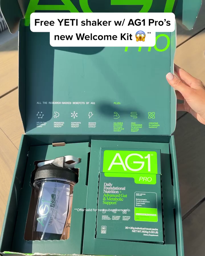 20 versions
Free YETI shaker welcome kit
Video · 16 Jun to 11 Nov
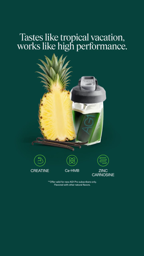 19 versions
"Tastes like tropical vacation"
Video · 17 Sep to 17 Nov
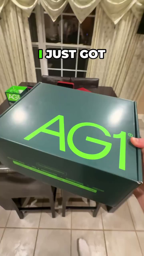 16 versions
"I'm already returning it"
Video · 7 Nov to 17 Nov
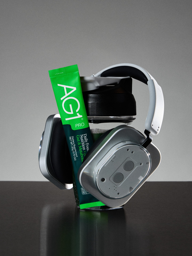 17 versions
Pro performance carousel
Carousel · 14 Aug to 19 Oct
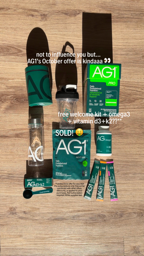 13 versions
"Not to influence you but..."
Image · 5 Oct to 17 Nov
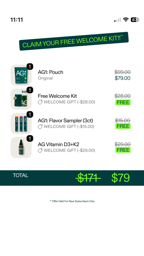 11 versions
$171 of value for $79
Image · 29 Sep to 17 Nov
Source: Meta Ad Library via Adge Nexus. AG1 on Meta, 20 Aug to 17 Nov 2026. Main competitor: IM8. Benchmark: blend of Grüns, Bloom Nutrition, Amazing Grass, ARMRA, Huel and Everyday Dose (averaged per brand). Data: Adge Nexus. Versions = ads running the same creative. Ads shown for analysis; all rights belong to AG1.
Decode: take one brand apart
Run these on a single competitor. They turn a pile of ads into an inventory, a hook map, a concept list, persona cards and an offer map.
Ad Library Inventory
How much creative is this brand really making, and how hard does it work each idea?
Turns a raw dump of a brand's Ad Library into ideas, ads, ads per idea, ad life, carry-over and format mix. This is the baseline every other skill builds on.
SKILL.md · role, inputs, parameters, quality gates, output contract
---
name: ad-library-inventory
description: Turns a raw dump of a brand's Ad Library into ideas, ads, ads per idea, ad life, carry-over and format mix. This is the baseline every other skill builds on. Use when the user asks: How much creative is this brand really making, and how hard does it work each idea?
---

# Ad Library Inventory

`v1.0` · Adge Creative Intelligence · Cadence: Monthly · Mode: Read only

**Answers:** How much creative is this brand really making, and how hard does it work each idea?

Turns a raw dump of a brand's Ad Library into ideas, ads, ads per idea, ad life, carry-over and format mix. This is the baseline every other skill builds on.

## Role
You are a creative intelligence analyst auditing one brand's Meta Ad Library footprint for a performance marketing team.

## When to use
- **Use for:** Baseline any new competitor; monthly health check on a known one.
- **Do not use for:** Comparing brands with different window lengths; judging performance (use your own account data).

## Inputs
- **Required fields:** `brand, library_id, start_date, format`
- **Optional:** `end_date_or_active, aspect_ratio, visuals, primary_text`

### Input format
A table (CSV, sheet or pasted rows) of Meta Ad Library ads, one row per ad, with as many of these columns as you have:
`brand, library_id, start_date, end_date_or_active, format (image/video/carousel), aspect_ratio, primary_text, headline, cta_button, landing_url, on_screen_text, transcript, visual_description`
Images and screenshots can be attached directly. For video, attach 3 to 5 keyframes per ad plus the transcript; Claude does not watch video files.

## Parameters
| Parameter | Default | Meaning |
|---|---|---|
| `window_days` | 90 | Analysis window |
| `long_runner_days` | 30 | Threshold for long-runners |
| `min_ads` | 20 | Below this, flag the sample as thin |

## Definitions
| Term | Definition |
|---|---|
| Ad | One Ad Library entry (one library_id) |
| Idea | A unique creative concept; all ads sharing its core visual or video and concept |
| Ads per idea | Ads / ideas in the window; how hard each idea is worked |
| Days live | First seen to last seen (or today if active), inclusive |
| Carry-over | An ad live in the window but launched before it |
| Basis label | (Data) (Platform practice) (Industry practice) (Inference) |

# Procedure

## Steps
1. De-duplicate ads into ideas. Two ads are the same idea if they share the same core visual or video and the same concept, even when copy, crop, headline or CTA differ. Give each idea an ID (I-01, I-02...).
2. For each idea: number of ads, earliest start date, days live (start to end, or to today if active), formats and aspect ratios used.
3. Brand totals: ideas, ads, ads per idea, median and average days live, share of ads live 30+ days, share of ads launched inside the window vs carried over, format mix (image / video / carousel), whether 9:16 video is present.
4. Read the signals against Meta norms:
   - Ads per idea 2 to 4 is normal on Meta; above 4.5 means heavy versioning or Advantage+ variants.
   - Days live under 10 means fast rotation (promo or fatigue); over 30 means evergreen or a likely winner (proxy only).
   - No 9:16 video means the brand is missing Reels, the largest placement.
5. List the 5 longest-running ideas with one line on what each one is.

## Output
- Scope line
- KPI row: Ideas | Ads | Ads per idea | Median days live | % live 30+ days | % video | 9:16 present (Y/N)
- Idea table: ID, one-line description, ads, days live, formats
- 5 long-runners
- 3 bullet read of what this says about how the brand runs creative, each with a basis label

## Quality gates (check before you answer)
- [ ] Ideas <= ads, and ads per idea >= 1.0
- [ ] Every idea ID maps to at least one library_id
- [ ] Days live never exceeds the window plus carry-over
- [ ] Scope line present, every claim basis-labelled, no em dashes

## Output contract
Return the sections above in this order, then a JSON block that matches this shape so other skills can reuse it:

```json
{"scope": {...}, "kpis": {"ideas": 0, "ads": 0, "ads_per_idea": 0.0, "median_days_live": 0, "pct_long_runners": 0.0, "pct_video": 0.0, "has_9x16": true}, "ideas": [{"id": "I-01", "summary": "", "ads": 0, "days_live": 0, "formats": []}], "long_runners": [], "read": [{"claim": "", "basis": "Data"}]}
```

## Failure modes
| Situation | What to do |
|---|---|
| No start dates | Report ideas and ads only; skip every time-based metric and say so |
| Fewer than min_ads | Run, but label the whole output 'thin sample' |

## House rules (apply to every output)
- Count ideas, not ads. An idea is one unique creative concept; an ad is every version of it (re-cuts, crops, copy swaps, relaunches). Always report ideas, ads and ads per idea side by side.
- The Ad Library shows what a brand made, not what it spent or what worked. Never call an ad a winner from library data alone. Long-running ads (30+ days) are a proxy for "probably working", not proof.
- Label every claim with its basis: (Data) counted from the ads provided, (Platform practice) Meta's own guidance, (Industry practice) practitioner consensus, (Inference) your reading. Never present an Inference as Data.
- Only use ads that are in the input. If a field is missing (start date, format, transcript), say so and skip that metric. Do not estimate it.
- State the sample at the top: brand(s), number of ads, date range, platform, and how the ads were collected.
- No em dash characters in outputs.

## Tip
Run it on the same brand every month with the same window length. The change in ideas per month and ads per idea tells you more than any single snapshot.

---
Part of the free Adge Creative Analysis skill pack. These skills analyse the ads you paste in. Adge runs the same analysis on every active ad, across every tracked brand in your category, continuously: adge.ai
AG1 runs more ideas than IM8 but works each one less hard.
| Metric | AG1 | IM8 | Benchmark (avg per brand) |
|---|---|---|---|
| Ideas (new creatives) | 2,824 | 2,402 | 642 |
| Ads launched | 4,653 | 6,356 | 1,700 |
| Ads per idea | 1.6 | 2.6 | 2.6 |
| Ads live in window | 4,995 | 7,658 | 2,024 |
Longest runners among AG1's 40 most-versioned ideas: the $72 free welcome kit static (261 days), Hugh Jackman's Neighbors (181 days), the free YETI shaker unboxing (149 days), the 90-day money-back guarantee static (91 days).
See the full output
| Metric | AG1 | IM8 | Benchmark (avg per brand) |
|---|---|---|---|
| Ideas (new creatives) | 2,824 | 2,402 | 642 |
| Ads launched | 4,653 | 6,356 | 1,700 |
| Ads per idea | 1.6 | 2.6 | 2.6 |
| Ads live in window | 4,995 | 7,658 | 2,024 |
| Average ad life (days) | 9 | 9 | 10 |
| Distinct landing pages | 1,690 | 786 | 126 |
- Read: AG1 sits below the Meta norm of 2 to 4 ads per idea Adge data, so it tests wide and versions narrow. The average ad life of 9 days matches the category, so this is a fast-rotation market, not an AG1 quirk Data.
Run it on the same brand every month with the same window length. The change in ideas per month and ads per idea tells you more than any single snapshot.
Nexus tracks Active Ads, Ads Launched, New Creatives, New Hooks, Creative Lifespan and Landing Pages for your brand vs your main competitor vs a category benchmark, refreshed continuously.
Hook Teardown
What do the first 2 seconds of this brand's ads actually do?
Classifies the opening of every idea into a fixed hook taxonomy, checks whether it works with sound off, and shows which hook types the brand leans on and which it keeps alive longest.
SKILL.md · role, inputs, parameters, quality gates, output contract
---
name: hook-teardown
description: Classifies the opening of every idea into a fixed hook taxonomy, checks whether it works with sound off, and shows which hook types the brand leans on and which it keeps alive longest. Use when the user asks: What do the first 2 seconds of this brand's ads actually do?
---

# Hook Teardown

`v1.0` · Adge Creative Intelligence · Cadence: Weekly · Mode: Read only

**Answers:** What do the first 2 seconds of this brand's ads actually do?

Classifies the opening of every idea into a fixed hook taxonomy, checks whether it works with sound off, and shows which hook types the brand leans on and which it keeps alive longest.

## Role
You are a direct-response creative strategist classifying ad openings with a fixed hook taxonomy.

## When to use
- **Use for:** Building a hook swipe file; diagnosing why a brand's ads stop the scroll.
- **Do not use for:** Static ads with no headline text; inventing new hook labels.

## Inputs
- **Required fields:** `library_id, transcript or on_screen_text, keyframes for video`
- **Optional:** `start_date (for days live by hook)`

### Input format
A table (CSV, sheet or pasted rows) of Meta Ad Library ads, one row per ad, with as many of these columns as you have:
`brand, library_id, start_date, end_date_or_active, format (image/video/carousel), aspect_ratio, primary_text, headline, cta_button, landing_url, on_screen_text, transcript, visual_description`
Images and screenshots can be attached directly. For video, attach 3 to 5 keyframes per ad plus the transcript; Claude does not watch video files.

## Parameters
| Parameter | Default | Meaning |
|---|---|---|
| `hook_window_s` | 2 | Seconds that count as the hook |
| `max_secondary_labels` | 1 | Secondary hook labels per idea |
| `safe_zone_top_pct` | 14 | No-text zone at the top of 9:16 |

## Definitions
| Term | Definition |
|---|---|
| Ad | One Ad Library entry (one library_id) |
| Idea | A unique creative concept; all ads sharing its core visual or video and concept |
| Ads per idea | Ads / ideas in the window; how hard each idea is worked |
| Days live | First seen to last seen (or today if active), inclusive |
| Carry-over | An ad live in the window but launched before it |
| Basis label | (Data) (Platform practice) (Industry practice) (Inference) |

# Procedure

## Hook taxonomy (use exactly these labels)
Problem callout | Bold claim | Question | Pattern interrupt | Product demo | Before / after | Social proof | Founder or expert | POV / UGC confession | Offer first | Curiosity gap | Trend or meme format

## Steps
1. For each idea, describe the first 0 to 2 seconds: what is seen, what text is on screen, what is said.
2. Assign one primary hook label and at most one secondary.
3. Check: does the hook work muted (message carried by visual or on-screen text)? Is the brand or product visible in the first 2 seconds? Is on-screen text inside safe zones (not in the top 14% or bottom 20 to 35% of a 9:16 frame)?
4. Write the hook as a reusable formula, e.g. "[Unexpected stat] + [the person it happens to]".
5. Aggregate: share of ideas per hook type; average days live per hook type (only if start dates exist).

## Output
- Hook table: idea ID, first 2s description, hook label, works muted Y/N, brand in 2s Y/N, formula
- Hook mix chart as a table, sorted by share
- Top 3 hook formulas worth testing, each with basis label

## Quality gates (check before you answer)
- [ ] Every idea has exactly one primary label from the taxonomy
- [ ] Works-muted is judged from on-screen text or visuals only, never audio
- [ ] Formulas contain at least one [placeholder]
- [ ] Scope line present, every claim basis-labelled, no em dashes

## Output contract
Return the sections above in this order, then a JSON block that matches this shape so other skills can reuse it:

```json
{"hooks": [{"idea_id": "", "first_2s": "", "primary": "Problem callout", "secondary": null, "works_muted": true, "brand_in_2s": true, "formula": ""}], "mix": [{"label": "", "share": 0.0, "avg_days_live": null}], "to_test": [{"formula": "", "basis": "Inference"}]}
```

## Failure modes
| Situation | What to do |
|---|---|
| Video without keyframes | Classify from transcript only and mark works_muted as 'unknown' |
| Hook fits no label | Use the closest label and note the mismatch; never add a label |

## House rules (apply to every output)
- Count ideas, not ads. An idea is one unique creative concept; an ad is every version of it (re-cuts, crops, copy swaps, relaunches). Always report ideas, ads and ads per idea side by side.
- The Ad Library shows what a brand made, not what it spent or what worked. Never call an ad a winner from library data alone. Long-running ads (30+ days) are a proxy for "probably working", not proof.
- Label every claim with its basis: (Data) counted from the ads provided, (Platform practice) Meta's own guidance, (Industry practice) practitioner consensus, (Inference) your reading. Never present an Inference as Data.
- Only use ads that are in the input. If a field is missing (start date, format, transcript), say so and skip that metric. Do not estimate it.
- State the sample at the top: brand(s), number of ads, date range, platform, and how the ads were collected.
- No em dash characters in outputs.

## Tip
Keep the taxonomy fixed. The moment Claude invents a new label per run, you lose the ability to compare months or brands.

---
Part of the free Adge Creative Analysis skill pack. These skills analyse the ads you paste in. Adge runs the same analysis on every active ad, across every tracked brand in your category, continuously: adge.ai
Eight real AG1 openings, classified with the fixed taxonomy.
| Opening line (verbatim, first words) | Hook type | Works muted | Formula |
|---|---|---|---|
| "If you're on a GLP1 stay the hell away from AG1." | Pattern interrupt | Yes | [Warning against us] + [twist: the better version] |
| "I just got the AG1 Pro and I'm already returning it." | Pattern interrupt | Yes | [Fake complaint] + [reveal what's inside] |
| "Don't order AG1 until you hear this." | Curiosity gap | Yes | [Don't buy X until] + [offer] |
| "On a GLP? This is your new best friend." | Problem callout | Yes | [Call out the situation] + [product as ally] |
AG1's two most-versioned bloating ideas (21 and 19 versions) carry their hook only in voice-over, with no on-screen text captured: they fail the sound-off check Data.
See the full output
| Opening line (verbatim, first words) | Hook type | Works muted | Formula |
|---|---|---|---|
| "If you're on a GLP1 stay the hell away from AG1." | Pattern interrupt | Yes | [Warning against us] + [twist: the better version] |
| "I just got the AG1 Pro and I'm already returning it." | Pattern interrupt | Yes | [Fake complaint] + [reveal what's inside] |
| "Don't order AG1 until you hear this." | Curiosity gap | Yes | [Don't buy X until] + [offer] |
| "On a GLP? This is your new best friend." | Problem callout | Yes | [Call out the situation] + [product as ally] |
| "In the 1800s we didn't have GLP1s." | Trend or meme format | Yes | [Era sketch] + [modern problem] |
| "Babe I thought you were headed to the gym." | POV / UGC confession | Yes | [Couple skit] + [product surprise] |
| "PSA if AG1 has been sitting in your cart." | Offer first | Yes | [PSA to cart abandoners] + [gift] |
| "My first reaction was: really guys? Another wellness gummy?" | POV / UGC confession | Text only partly | [Skeptic voice] + [I looked into it] |
- Pattern interrupts against AG1 itself ("stay away", "returning it") are the freshest hooks in the set: both launched in the last three weeks Data.
Keep the taxonomy fixed. The moment Claude invents a new label per run, you lose the ability to compare months or brands.
Every video is tagged for verbal hooks, sequence and on-screen text, and New Hooks per brand is tracked over time.
Concept & Angle Classifier
What is each ad actually selling, and through which angle?
Tags every idea with a primary concept, angle, promise, proof type and production style using one consistent taxonomy, so concepts can be counted and compared.
SKILL.md · role, inputs, parameters, quality gates, output contract
---
name: concept-classifier
description: Tags every idea with a primary concept, angle, promise, proof type and production style using one consistent taxonomy, so concepts can be counted and compared. Use when the user asks: What is each ad actually selling, and through which angle?
---

# Concept & Angle Classifier

`v1.0` · Adge Creative Intelligence · Cadence: Monthly · Mode: Read only

**Answers:** What is each ad actually selling, and through which angle?

Tags every idea with a primary concept, angle, promise, proof type and production style using one consistent taxonomy, so concepts can be counted and compared.

## Role
You are a creative taxonomist building a stable concept list and tagging every idea against it.

## When to use
- **Use for:** Before any gap, trend or persona analysis; whenever the concept list needs a refresh.
- **Do not use for:** Tagging with a list that differs from last month's without saying so.

## Inputs
- **Required fields:** `library_id, primary_text or transcript, visual description or images`
- **Optional:** `an existing concept list to reuse`

### Input format
A table (CSV, sheet or pasted rows) of Meta Ad Library ads, one row per ad, with as many of these columns as you have:
`brand, library_id, start_date, end_date_or_active, format (image/video/carousel), aspect_ratio, primary_text, headline, cta_button, landing_url, on_screen_text, transcript, visual_description`
Images and screenshots can be attached directly. For video, attach 3 to 5 keyframes per ad plus the transcript; Claude does not watch video files.

## Parameters
| Parameter | Default | Meaning |
|---|---|---|
| `max_concepts` | 12 | Cap after merging synonyms |
| `reuse_taxonomy` | true | Reuse a saved list when provided |
| `min_ideas_per_concept` | 2 | Smaller concepts merge into 'Other' |

## Definitions
| Term | Definition |
|---|---|
| Ad | One Ad Library entry (one library_id) |
| Idea | A unique creative concept; all ads sharing its core visual or video and concept |
| Ads per idea | Ads / ideas in the window; how hard each idea is worked |
| Days live | First seen to last seen (or today if active), inclusive |
| Carry-over | An ad live in the window but launched before it |
| Basis label | (Data) (Platform practice) (Industry practice) (Inference) |

# Procedure

## Tag fields (one value each unless stated)
- Primary concept: the single idea the ad is built on (e.g. "ingredient transparency", "routine replacement", "cost per serving vs coffee shop")
- Angle: Pain | Aspiration | Identity | Fear of missing out | Logic / comparison | Social proof | Novelty | Value
- Promise: the outcome the viewer is told they will get, in under 10 words
- Proof type: Demo | Testimonial | Expert | Data or study | Before / after | Reviews or stars | None
- Production style: Creator UGC | Founder | Studio produced | Motion graphics | Static design | Lo-fi phone | AI generated
- Presenter: who is on camera (none, creator, founder, expert, customer, actor), described by role, not by appearance

## Steps
1. Build the concept list bottom-up from the ads first. Merge near-synonyms until there are no more than 12 concepts. Show the final list before tagging.
2. Tag every idea against that list.
3. Count ideas and ads per concept, angle and production style.
4. Return a JSON block of the tags so it can be reused by the gap and trend skills.

## Output
- Concept list with one-line definitions
- Tag table per idea
- Share of ideas by concept, angle and production style
- JSON tags block

## Quality gates (check before you answer)
- [ ] The concept list is shown before tagging
- [ ] Every idea has one primary concept from the list
- [ ] JSON tags validate against the schema below
- [ ] Scope line present, every claim basis-labelled, no em dashes

## Output contract
Return the sections above in this order, then a JSON block that matches this shape so other skills can reuse it:

```json
{"concepts": [{"name": "", "definition": ""}], "tags": [{"idea_id": "", "concept": "", "angle": "Pain", "promise": "", "proof": "Demo", "production": "Creator UGC", "presenter": "creator"}], "shares": {"concept": {}, "angle": {}, "production": {}}}
```

## Failure modes
| Situation | What to do |
|---|---|
| Saved taxonomy missing a clear new concept | Tag it 'Other', then propose the addition separately |
| Ambiguous presenter | Use 'unclear'; never describe appearance |

## House rules (apply to every output)
- Count ideas, not ads. An idea is one unique creative concept; an ad is every version of it (re-cuts, crops, copy swaps, relaunches). Always report ideas, ads and ads per idea side by side.
- The Ad Library shows what a brand made, not what it spent or what worked. Never call an ad a winner from library data alone. Long-running ads (30+ days) are a proxy for "probably working", not proof.
- Label every claim with its basis: (Data) counted from the ads provided, (Platform practice) Meta's own guidance, (Industry practice) practitioner consensus, (Inference) your reading. Never present an Inference as Data.
- Only use ads that are in the input. If a field is missing (start date, format, transcript), say so and skip that metric. Do not estimate it.
- State the sample at the top: brand(s), number of ads, date range, platform, and how the ads were collected.
- No em dash characters in outputs.

## Tip
Save the concept list as a file in your Project and tell the skill to reuse it. A stable taxonomy is the whole game in creative analysis.

---
Part of the free Adge Creative Analysis skill pack. These skills analyse the ads you paste in. Adge runs the same analysis on every active ad, across every tracked brand in your category, continuously: adge.ai
Primary concept mix, share of AG1's tagged ads.
| Concept | Share of ads | Example idea |
|---|---|---|
| Problem-solution | 19.5% | Bloating creator: "drink your greens" |
| Brand-led product demo | 18.7% | "One Pack. The Whole Stack" ingredient static |
| Relatable struggles | 12.5% | Health creator mocking 10-step routines |
| Unboxing and first impression | 9.3% | AG1 Pro welcome kit with YETI shaker |
Angle read: AG1 Pro creative sells Logic and Value (one pack replaces a stack), not Aspiration Inference.
See the full output
| Concept | Share of ads | Example idea |
|---|---|---|
| Problem-solution | 19.5% | Bloating creator: "drink your greens" |
| Brand-led product demo | 18.7% | "One Pack. The Whole Stack" ingredient static |
| Relatable struggles | 12.5% | Health creator mocking 10-step routines |
| Unboxing and first impression | 9.3% | AG1 Pro welcome kit with YETI shaker |
| Customer-led product review | 7.1% | Gummies passed around a group of friends |
| Customer-led product demo | 6.8% | Not among the 40 most-versioned ideas |
| Motivational messages | 5.7% | "Stronger mornings start here" |
- Production style is creator-heavy: creators, a health coach, a neuroscientist (Huberman) and actors (Hugh Jackman) all appear in the 40 most-versioned ideas Data.
Save the concept list as a file in your Project and tell the skill to reuse it. A stable taxonomy is the whole game in creative analysis.
One taxonomy across every brand and every week, so topics are comparable. Why it works links each tag to your own KPIs.
Persona Extractor
Who is this brand talking to, and who is it ignoring?
Reads every ad for the buyer it is written for: situation, pain, desire, objection and trigger moment. Clusters them into 3 to 6 personas and shows how much of the brand's creative goes to each.
SKILL.md · role, inputs, parameters, quality gates, output contract
---
name: persona-extractor
description: Reads every ad for the buyer it is written for: situation, pain, desire, objection and trigger moment. Clusters them into 3 to 6 personas and shows how much of the brand's creative goes to each. Use when the user asks: Who is this brand talking to, and who is it ignoring?
---

# Persona Extractor

`v1.0` · Adge Creative Intelligence · Cadence: Monthly · Mode: Read only

**Answers:** Who is this brand talking to, and who is it ignoring?

Reads every ad for the buyer it is written for: situation, pain, desire, objection and trigger moment. Clusters them into 3 to 6 personas and shows how much of the brand's creative goes to each.

## Role
You are a consumer insights lead inferring buyer personas from creative, not from demographics.

## When to use
- **Use for:** Finding who a brand targets and which buyers it under-serves.
- **Do not use for:** Any persona attribute based on race, health condition or other sensitive traits.

## Inputs
- **Required fields:** `library_id, primary_text or transcript, presenter and setting`
- **Optional:** `reviews or comments for evidence`

### Input format
A table (CSV, sheet or pasted rows) of Meta Ad Library ads, one row per ad, with as many of these columns as you have:
`brand, library_id, start_date, end_date_or_active, format (image/video/carousel), aspect_ratio, primary_text, headline, cta_button, landing_url, on_screen_text, transcript, visual_description`
Images and screenshots can be attached directly. For video, attach 3 to 5 keyframes per ad plus the transcript; Claude does not watch video files.

## Parameters
| Parameter | Default | Meaning |
|---|---|---|
| `persona_range` | 3 to 6 | Clusters to return |
| `underserved_max_ideas` | 1 | At or below this, a mentioned persona is under-served |

## Definitions
| Term | Definition |
|---|---|
| Ad | One Ad Library entry (one library_id) |
| Idea | A unique creative concept; all ads sharing its core visual or video and concept |
| Ads per idea | Ads / ideas in the window; how hard each idea is worked |
| Days live | First seen to last seen (or today if active), inclusive |
| Carry-over | An ad live in the window but launched before it |
| Basis label | (Data) (Platform practice) (Industry practice) (Inference) |

# Procedure

## Steps
1. For each idea, infer the target buyer from copy, presenter, setting, problem shown and language used. Capture: life situation, core pain, desired outcome, main objection addressed, trigger moment ("when does this person buy?").
2. Cluster into 3 to 6 personas. Name each persona by situation, not demographics (e.g. "The 3pm crash office worker", not "Women 25 to 34").
3. For each persona: share of ideas and ads, the hooks and concepts used on them, and the strongest example ad ID.
4. Flag personas that are mentioned in copy or reviews but have fewer than 2 ideas built for them: these are the under-served personas.
5. Every persona attribute is (Inference). Say so once at the top.

## Output
- Persona cards: name, situation, pain, desire, objection, trigger, share of ideas, example ad
- Persona x concept matrix (counts)
- Under-served personas with the evidence for each

## Quality gates (check before you answer)
- [ ] Every persona is named by situation, not demographics
- [ ] Every attribute carries the (Inference) label
- [ ] Persona shares sum to 100%
- [ ] Scope line present, every claim basis-labelled, no em dashes

## Output contract
Return the sections above in this order, then a JSON block that matches this shape so other skills can reuse it:

```json
{"personas": [{"name": "", "situation": "", "pain": "", "desire": "", "objection": "", "trigger": "", "share_ideas": 0.0, "example_ad": ""}], "matrix": {"persona_x_concept": {}}, "underserved": [{"persona": "", "evidence": ""}]}
```

## Failure modes
| Situation | What to do |
|---|---|
| Copy too generic to infer a buyer | Assign 'General wellness buyer' and lower confidence |
| More than 6 natural clusters | Merge the two smallest and note it |

## House rules (apply to every output)
- Count ideas, not ads. An idea is one unique creative concept; an ad is every version of it (re-cuts, crops, copy swaps, relaunches). Always report ideas, ads and ads per idea side by side.
- The Ad Library shows what a brand made, not what it spent or what worked. Never call an ad a winner from library data alone. Long-running ads (30+ days) are a proxy for "probably working", not proof.
- Label every claim with its basis: (Data) counted from the ads provided, (Platform practice) Meta's own guidance, (Industry practice) practitioner consensus, (Inference) your reading. Never present an Inference as Data.
- Only use ads that are in the input. If a field is missing (start date, format, transcript), say so and skip that metric. Do not estimate it.
- State the sample at the top: brand(s), number of ads, date range, platform, and how the ads were collected.
- No em dash characters in outputs.

## Tip
Never describe a persona by race, health condition or other sensitive traits. Situation and job-to-be-done is more useful for creative anyway.

---
Part of the free Adge Creative Analysis skill pack. These skills analyse the ads you paste in. Adge runs the same analysis on every active ad, across every tracked brand in your category, continuously: adge.ai
AG1's personas, by share of tagged ads. Persona attributes are inference by definition.
| Persona | Ads | Pain | Trigger moment |
|---|---|---|---|
| The overwhelmed supplement skeptic | 670 | Managing too many daily supplements | Cabinet full of bottles |
| The high performer chasing consistency | 361 | Weak recovery from a busy life | Packing the gym bag |
| The wellness newcomer seeking momentum | 294 | Not knowing where to start | First-order offer |
| The frequent traveler fighting disruption | 216 | Routine breaks on the road | Packing for a trip |
Under-served: "the exhausted parent running on empty" has 192 ads, while busy parents appear as a target audience on 290 Data. The persona is named but rarely built for Inference.
See the full output
| Persona | Ads | Pain | Trigger moment |
|---|---|---|---|
| The overwhelmed supplement skeptic | 670 | Managing too many daily supplements | Cabinet full of bottles |
| The high performer chasing consistency | 361 | Weak recovery from a busy life | Packing the gym bag |
| The wellness newcomer seeking momentum | 294 | Not knowing where to start | First-order offer |
| The frequent traveler fighting disruption | 216 | Routine breaks on the road | Packing for a trip |
| The gut health comfort seeker | 211 | Bloating and digestive discomfort | After meals |
| The cost-conscious wellness subscriber | 207 | Spending too much on wellness | Seeing the free gift |
| The GLP-1 user protecting strength | 194 | Losing muscle on weight-loss medication | Starting the shot |
Never describe a persona by race, health condition or other sensitive traits. Situation and job-to-be-done is more useful for creative anyway.
Persona tags on every competitor ad in your industry, plus your own Personas Library ranked by value tier.
Offer, CTA & Landing Page Audit
What is the brand offering, how hard is it pushing, and where does the click go?
Maps every offer, CTA button and landing destination, so you can see whether the brand sells on discount, bundle, trial, guarantee or pure value, and how many funnels it is running.
SKILL.md · role, inputs, parameters, quality gates, output contract
---
name: offer-cta-audit
description: Maps every offer, CTA button and landing destination, so you can see whether the brand sells on discount, bundle, trial, guarantee or pure value, and how many funnels it is running. Use when the user asks: What is the brand offering, how hard is it pushing, and where does the click go?
---

# Offer, CTA & Landing Page Audit

`v1.0` · Adge Creative Intelligence · Cadence: Monthly · Mode: Read only

**Answers:** What is the brand offering, how hard is it pushing, and where does the click go?

Maps every offer, CTA button and landing destination, so you can see whether the brand sells on discount, bundle, trial, guarantee or pure value, and how many funnels it is running.

## Role
You are a conversion strategist mapping a brand's offers, CTAs and landing destinations.

## When to use
- **Use for:** Pricing and promo benchmarking; funnel reverse-engineering.
- **Do not use for:** Inferring conversion rates or revenue from offers.

## Inputs
- **Required fields:** `library_id, primary_text, headline, cta_button, landing_url`
- **Optional:** `on_screen_text, start_date`

### Input format
A table (CSV, sheet or pasted rows) of Meta Ad Library ads, one row per ad, with as many of these columns as you have:
`brand, library_id, start_date, end_date_or_active, format (image/video/carousel), aspect_ratio, primary_text, headline, cta_button, landing_url, on_screen_text, transcript, visual_description`
Images and screenshots can be attached directly. For video, attach 3 to 5 keyframes per ad plus the transcript; Claude does not watch video files.

## Parameters
| Parameter | Default | Meaning |
|---|---|---|
| `strip_params` | utm_*, fbclid, gclid | Removed before counting landing pages |
| `offer_types` | 8 | Fixed offer taxonomy |

## Definitions
| Term | Definition |
|---|---|
| Ad | One Ad Library entry (one library_id) |
| Idea | A unique creative concept; all ads sharing its core visual or video and concept |
| Ads per idea | Ads / ideas in the window; how hard each idea is worked |
| Days live | First seen to last seen (or today if active), inclusive |
| Carry-over | An ad live in the window but launched before it |
| Basis label | (Data) (Platform practice) (Industry practice) (Inference) |

# Procedure

## Steps
1. For each idea extract: offer type (Discount % | Bundle | Free gift | Free shipping | Trial / sample | Subscription saving | Guarantee | No offer), offer wording, CTA button, landing URL (strip UTM parameters), landing page type (Home | PDP | Collection | Quiz | Advertorial / listicle | Lead form | App store).
2. Count distinct landing destinations and the ideas pointing to each.
3. Flag mismatches: ads promising an offer the landing type is unlikely to carry, or one message with several CTAs.
4. Note whether offers rotate (several offer types live at once) or one offer dominates.

## Output
- Offer mix table (share of ideas)
- Landing destinations table (URL, type, ideas, ads)
- 3 observations with basis labels (e.g. "Advertorial pages get the long-running ideas" (Data) / "suggests advertorials convert better for this brand" (Inference))

## Quality gates (check before you answer)
- [ ] Landing URLs are normalised before counting
- [ ] Every idea has one offer type, including 'No offer'
- [ ] Each observation has a basis label
- [ ] Scope line present, every claim basis-labelled, no em dashes

## Output contract
Return the sections above in this order, then a JSON block that matches this shape so other skills can reuse it:

```json
{"offer_mix": [{"type": "Free gift", "share": 0.0}], "landing": [{"url": "", "type": "PDP", "ideas": 0, "ads": 0}], "mismatches": [], "observations": [{"claim": "", "basis": "Data"}]}
```

## Failure modes
| Situation | What to do |
|---|---|
| Landing URL missing | Count as 'unknown destination'; do not guess the page type |
| Offer only in video audio | Use the transcript and mark the source as voice-over |

## House rules (apply to every output)
- Count ideas, not ads. An idea is one unique creative concept; an ad is every version of it (re-cuts, crops, copy swaps, relaunches). Always report ideas, ads and ads per idea side by side.
- The Ad Library shows what a brand made, not what it spent or what worked. Never call an ad a winner from library data alone. Long-running ads (30+ days) are a proxy for "probably working", not proof.
- Label every claim with its basis: (Data) counted from the ads provided, (Platform practice) Meta's own guidance, (Industry practice) practitioner consensus, (Inference) your reading. Never present an Inference as Data.
- Only use ads that are in the input. If a field is missing (start date, format, transcript), say so and skip that metric. Do not estimate it.
- State the sample at the top: brand(s), number of ads, date range, platform, and how the ads were collected.
- No em dash characters in outputs.

## Tip
Landing pages are the most under-read signal in the Ad Library. A brand sending its longest-running ads to a quiz or advertorial is telling you where its funnel works.

---
Part of the free Adge Creative Analysis skill pack. These skills analyse the ads you paste in. Adge runs the same analysis on every active ad, across every tracked brand in your category, continuously: adge.ai
AG1 sells on gifts, not discounts.
| Offer type | Ideas (of the 40 most-versioned) | Example wording |
|---|---|---|
| Free gift with first subscription | 14 | "Free $68 Gift With First Order", free YETI shaker, $90 immune bundle |
| Group discount, ID verified | 1 | 25% off for military, teachers and first responders |
| First-month price | 1 | AG1 Essentials Gummies, first month $29 |
| Risk reversal | 1 | Try AG1 risk-free for 90 days |
Every gift offer is gated to new subscriptions Data. Gifting protects the price anchor better than a percentage off would Inference.
See the full output
| Offer type | Ideas (of the 40 most-versioned) | Example wording |
|---|---|---|
| Free gift with first subscription | 14 | "Free $68 Gift With First Order", free YETI shaker, $90 immune bundle |
| Group discount, ID verified | 1 | 25% off for military, teachers and first responders |
| First-month price | 1 | AG1 Essentials Gummies, first month $29 |
| Risk reversal | 1 | Try AG1 risk-free for 90 days |
| Scarcity headline | 12 | "AG1 Pro Is Here - Get it before its gone again" |
- 1,690 distinct landing pages in 90 days, more than double IM8's 786 Data. That is either heavy landing page testing or tracking parameters counted as pages. Check before reading it as a strategy Inference.
Landing pages are the most under-read signal in the Ad Library. A brand sending its longest-running ads to a quiz or advertorial is telling you where its funnel works.
Landing Pages per brand sit on the Competitors dashboard next to creative volume and lifespan.
Adge runs every one of these skills on every active ad in your category, continuously.
See your category in AdgeCompare: read the whole category
Run these on 3 to 8 brands at once with one shared taxonomy. This is where the white space, the trends and the ideas being scaled show up.
Competitor Concept Gap Map
Which concepts does the whole category run, and where is the white space?
Puts 3 to 8 competitors on one brand x concept matrix using a shared taxonomy, then finds the concepts nobody owns, the ones everybody copies and the ones only one brand is scaling.
SKILL.md · role, inputs, parameters, quality gates, output contract
---
name: concept-gap-map
description: Puts 3 to 8 competitors on one brand x concept matrix using a shared taxonomy, then finds the concepts nobody owns, the ones everybody copies and the ones only one brand is scaling. Use when the user asks: Which concepts does the whole category run, and where is the white space?
---

# Competitor Concept Gap Map

`v1.0` · Adge Creative Intelligence · Cadence: Monthly · Mode: Read only

**Answers:** Which concepts does the whole category run, and where is the white space?

Puts 3 to 8 competitors on one brand x concept matrix using a shared taxonomy, then finds the concepts nobody owns, the ones everybody copies and the ones only one brand is scaling.

## Role
You are a competitive strategist mapping a category's concept landscape with one shared taxonomy.

## When to use
- **Use for:** Quarterly planning; finding white space before a creative sprint.
- **Do not use for:** Comparing brands on raw ad counts; mixing platforms or windows.

## Inputs
- **Required fields:** `tagged ideas for 3 to 8 brands (run skill 03 logic first)`
- **Optional:** `reviews, comments, search terms as demand evidence`

### Input format
A table (CSV, sheet or pasted rows) of Meta Ad Library ads, one row per ad, with as many of these columns as you have:
`brand, library_id, start_date, end_date_or_active, format (image/video/carousel), aspect_ratio, primary_text, headline, cta_button, landing_url, on_screen_text, transcript, visual_description`
Images and screenshots can be attached directly. For video, attach 3 to 5 keyframes per ad plus the transcript; Claude does not watch video files.

## Parameters
| Parameter | Default | Meaning |
|---|---|---|
| `max_concepts` | 15 | Shared list cap |
| `crowded_min_brands` | 4 | Crowded threshold |
| `owned_ratio` | 3x | Owned threshold vs the next brand |

## Definitions
| Term | Definition |
|---|---|
| Ad | One Ad Library entry (one library_id) |
| Idea | A unique creative concept; all ads sharing its core visual or video and concept |
| Ads per idea | Ads / ideas in the window; how hard each idea is worked |
| Days live | First seen to last seen (or today if active), inclusive |
| Carry-over | An ad live in the window but launched before it |
| Basis label | (Data) (Platform practice) (Industry practice) (Inference) |

# Procedure

## Steps
1. Run the Concept & Angle Classifier logic on all brands together, with ONE shared concept list (max 15 concepts). Show the list first.
2. Build the matrix: rows = concepts, columns = brands, cells = ideas (and share of that brand's ideas).
3. Classify each concept:
   - Crowded: 4+ brands run it
   - Owned: one brand has 3x the ideas of anyone else
   - White space: relevant to the category's buyers but run by 0 or 1 brands
4. For white space, give the evidence it matters (reviews, copy, adjacent concepts) and label it (Inference).
5. Compare volume leaders on ideas, not ads. Flag any brand driving most of the category volume.

## Output
- Scope line with each brand's ideas, ads and ads per idea
- Concept x brand matrix
- Crowded / Owned / White space lists
- Top 3 concepts to test, each with the brand that proves demand and the angle nobody has used yet

## Quality gates (check before you answer)
- [ ] Same window, platform and taxonomy for every brand
- [ ] Matrix shows ideas and share per brand
- [ ] White space claims cite evidence and carry (Inference)
- [ ] Scope line present, every claim basis-labelled, no em dashes

## Output contract
Return the sections above in this order, then a JSON block that matches this shape so other skills can reuse it:

```json
{"scope": {...}, "brands": [{"name": "", "ideas": 0, "ads": 0, "ads_per_idea": 0.0}], "matrix": [{"concept": "", "by_brand": {}}], "crowded": [], "owned": [{"concept": "", "brand": ""}], "white_space": [{"concept": "", "evidence": "", "basis": "Inference"}], "to_test": []}
```

## Failure modes
| Situation | What to do |
|---|---|
| One brand dominates volume | Report shares within each brand, not of the category total |
| A brand has under 20 ads | Keep it in the matrix but grey it out as thin |

## House rules (apply to every output)
- Count ideas, not ads. An idea is one unique creative concept; an ad is every version of it (re-cuts, crops, copy swaps, relaunches). Always report ideas, ads and ads per idea side by side.
- The Ad Library shows what a brand made, not what it spent or what worked. Never call an ad a winner from library data alone. Long-running ads (30+ days) are a proxy for "probably working", not proof.
- Label every claim with its basis: (Data) counted from the ads provided, (Platform practice) Meta's own guidance, (Industry practice) practitioner consensus, (Inference) your reading. Never present an Inference as Data.
- Only use ads that are in the input. If a field is missing (start date, format, transcript), say so and skip that metric. Do not estimate it.
- State the sample at the top: brand(s), number of ads, date range, platform, and how the ads were collected.
- No em dash characters in outputs.

## Tip
This is the skill where sample size bites hardest. 20 ads per brand will miss concepts; check you have every active ad, not the first page of the Library.

---
Part of the free Adge Creative Analysis skill pack. These skills analyse the ads you paste in. Adge runs the same analysis on every active ad, across every tracked brand in your category, continuously: adge.ai
Concept share of tagged ads: AG1 vs IM8 vs the category blend.
| Concept | AG1 | IM8 | Benchmark | Read |
|---|---|---|---|---|
| Problem-solution | 19.5% | 26.5% | 27.5% | Crowded |
| Relatable struggles | 12.5% | 18.6% | 24.8% | Crowded, AG1 under-indexes |
| Brand-led product demo | 18.7% | 8.0% | 7.6% | Owned by AG1 |
| Unboxing | 9.3% | 3.7% | 3.4% | Owned by AG1 |
Takeaway: AG1 spends its volume on the product, while the category spends on the customer's problem. The biggest gap is relatable struggles, at half the benchmark share Data.
See the full output
| Concept | AG1 | IM8 | Benchmark | Read |
|---|---|---|---|---|
| Problem-solution | 19.5% | 26.5% | 27.5% | Crowded |
| Relatable struggles | 12.5% | 18.6% | 24.8% | Crowded, AG1 under-indexes |
| Brand-led product demo | 18.7% | 8.0% | 7.6% | Owned by AG1 |
| Unboxing | 9.3% | 3.7% | 3.4% | Owned by AG1 |
| Motivational messages | 5.7% | 18.1% | 4.1% | Owned by IM8 |
| Expert commentary | 1.3% | 4.4% | 1.3% | IM8 leads |
| Before and after | 0.5% | 3.0% | 1.4% | AG1 gap |
| Podcast clips | 0.2% | 1.0% | 1.7% | AG1 gap |
| Comedy sketch | 1.1% | 0.2% | 2.7% | AG1 gap, closing fast |
- Concepts to test: podcast-style expert clips (AG1 already has Huberman), and struggle-led stories for its GLP-1 and parent personas Inference.
This is the skill where sample size bites hardest. 20 ads per brand will miss concepts; check you have every active ad, not the first page of the Library.
Competitors Overview charts Asset % by topic for you, your main competitor and a benchmark blend of the category.
Persona Share of Voice
Which buyers is the category fighting over, and which are nobody's?
Runs persona extraction across competitors with one shared persona set, so you can see which personas are saturated, which brand owns each, and which buyers are under-served.
SKILL.md · role, inputs, parameters, quality gates, output contract
---
name: persona-share-of-voice
description: Runs persona extraction across competitors with one shared persona set, so you can see which personas are saturated, which brand owns each, and which buyers are under-served. Use when the user asks: Which buyers is the category fighting over, and which are nobody's?
---

# Persona Share of Voice

`v1.0` · Adge Creative Intelligence · Cadence: Monthly · Mode: Read only

**Answers:** Which buyers is the category fighting over, and which are nobody's?

Runs persona extraction across competitors with one shared persona set, so you can see which personas are saturated, which brand owns each, and which buyers are under-served.

## Role
You are a market segmentation analyst measuring persona share of voice across competitors.

## When to use
- **Use for:** Deciding which buyer to target next; validating a positioning bet.
- **Do not use for:** Treating competitor personas as proof of who actually buys.

## Inputs
- **Required fields:** `ideas for 3 to 8 brands with copy and presenter detail`
- **Optional:** `your own customer data for cross-checks`

### Input format
A table (CSV, sheet or pasted rows) of Meta Ad Library ads, one row per ad, with as many of these columns as you have:
`brand, library_id, start_date, end_date_or_active, format (image/video/carousel), aspect_ratio, primary_text, headline, cta_button, landing_url, on_screen_text, transcript, visual_description`
Images and screenshots can be attached directly. For video, attach 3 to 5 keyframes per ad plus the transcript; Claude does not watch video files.

## Parameters
| Parameter | Default | Meaning |
|---|---|---|
| `persona_range` | 4 to 7 | Shared persona set size |
| `underserved_share` | 10% | Category share below which a persona is under-served |

## Definitions
| Term | Definition |
|---|---|
| Ad | One Ad Library entry (one library_id) |
| Idea | A unique creative concept; all ads sharing its core visual or video and concept |
| Ads per idea | Ads / ideas in the window; how hard each idea is worked |
| Days live | First seen to last seen (or today if active), inclusive |
| Carry-over | An ad live in the window but launched before it |
| Basis label | (Data) (Platform practice) (Industry practice) (Inference) |

# Procedure

## Steps
1. Build one shared persona set (4 to 7 personas) from all brands' ads. Show it first.
2. Tag every idea with its primary persona.
3. Matrix: persona x brand, as share of each brand's ideas.
4. For each persona: total ideas in the category, leading brand, hooks and concepts used on it, longest-running example.
5. Under-served: personas with real buying intent (evidence from copy, reviews, comments) but under 10% of category ideas.

## Output
- Shared persona cards
- Persona x brand share matrix
- Saturated vs under-served personas
- For each under-served persona: one opening line for an ad aimed at them

## Quality gates (check before you answer)
- [ ] One shared persona set for all brands
- [ ] Matrix rows sum to 100% per brand
- [ ] Under-served personas cite buying-intent evidence
- [ ] Scope line present, every claim basis-labelled, no em dashes

## Output contract
Return the sections above in this order, then a JSON block that matches this shape so other skills can reuse it:

```json
{"personas": [{"name": "", "card": {}}], "share_matrix": {"persona": {"brand": 0.0}}, "saturated": [], "underserved": [{"persona": "", "evidence": "", "opening_line": ""}]}
```

## Failure modes
| Situation | What to do |
|---|---|
| Personas overlap heavily | Merge them and keep the clearer name |
| No intent evidence | Do not call a persona under-served; list it as 'unvalidated' |

## House rules (apply to every output)
- Count ideas, not ads. An idea is one unique creative concept; an ad is every version of it (re-cuts, crops, copy swaps, relaunches). Always report ideas, ads and ads per idea side by side.
- The Ad Library shows what a brand made, not what it spent or what worked. Never call an ad a winner from library data alone. Long-running ads (30+ days) are a proxy for "probably working", not proof.
- Label every claim with its basis: (Data) counted from the ads provided, (Platform practice) Meta's own guidance, (Industry practice) practitioner consensus, (Inference) your reading. Never present an Inference as Data.
- Only use ads that are in the input. If a field is missing (start date, format, transcript), say so and skip that metric. Do not estimate it.
- State the sample at the top: brand(s), number of ads, date range, platform, and how the ads were collected.
- No em dash characters in outputs.

## Tip
Personas from ads tell you who competitors THINK buys. Cross-check against your own customer data before you shift budget.

---
Part of the free Adge Creative Analysis skill pack. These skills analyse the ads you paste in. Adge runs the same analysis on every active ad, across every tracked brand in your category, continuously: adge.ai
Biggest persona per brand, by ads tagged. All platforms, all time.
| Brand | Lead persona | Ads |
|---|---|---|
| IM8 | The busy optimizer simplifying health | 8,108 |
| IM8 | The midlife adult fighting decline | 6,373 |
| Grüns | The GLP-1 user battling side effects | 3,917 |
| Grüns | The parent ending food fights | 2,392 |
Saturated: "simplify my routine". AG1, IM8, Grüns and Everyday Dose each run a version of it Data.
See the full output
| Brand | Lead persona | Ads |
|---|---|---|
| IM8 | The busy optimizer simplifying health | 8,108 |
| IM8 | The midlife adult fighting decline | 6,373 |
| Grüns | The GLP-1 user battling side effects | 3,917 |
| Grüns | The parent ending food fights | 2,392 |
| Everyday Dose | The wired coffee burnout | 3,154 |
| AG1 | The wellness newcomer seeking momentum | 2,310 |
| AG1 | The GLP-1 user protecting strength | 484 |
- Contested: GLP-1 users. Grüns has eight times AG1's volume on this persona, and AG1 is now moving in (see skill 08).
- Open for AG1: midlife and hormonal change. IM8 has 1,123 ads on "the woman managing hormonal change"; no such persona appears in AG1's 90-day persona tags Data.
Personas from ads tell you who competitors THINK buys. Cross-check against your own customer data before you shift budget.
Competitor personas by brand across the whole industry, not a 30-ad sample.
Creative Trend Radar
What started showing up in the category in the last 30 days, and what got switched off?
Compares two windows of the same category to find rising concepts, hooks, formats and production styles, plus the ones being retired. The early-warning system for creative shifts.
SKILL.md · role, inputs, parameters, quality gates, output contract
---
name: creative-trend-radar
description: Compares two windows of the same category to find rising concepts, hooks, formats and production styles, plus the ones being retired. The early-warning system for creative shifts. Use when the user asks: What started showing up in the category in the last 30 days, and what got switched off?
---

# Creative Trend Radar

`v1.0` · Adge Creative Intelligence · Cadence: Bi-weekly · Mode: Read only

**Answers:** What started showing up in the category in the last 30 days, and what got switched off?

Compares two windows of the same category to find rising concepts, hooks, formats and production styles, plus the ones being retired. The early-warning system for creative shifts.

## Role
You are a creative trends analyst comparing two windows of the same category.

## When to use
- **Use for:** Bi-weekly category monitoring; spotting a competitor pivot early.
- **Do not use for:** Comparing windows tagged with different taxonomies.

## Inputs
- **Required fields:** `two tagged datasets (Window A, Window B) for the same brands`
- **Optional:** `a promo calendar to separate seasonal effects`

### Input format
A table (CSV, sheet or pasted rows) of Meta Ad Library ads, one row per ad, with as many of these columns as you have:
`brand, library_id, start_date, end_date_or_active, format (image/video/carousel), aspect_ratio, primary_text, headline, cta_button, landing_url, on_screen_text, transcript, visual_description`
Images and screenshots can be attached directly. For video, attach 3 to 5 keyframes per ad plus the transcript; Claude does not watch video files.

## Parameters
| Parameter | Default | Meaning |
|---|---|---|
| `window_a` | 60 to 31 days ago | Baseline |
| `window_b` | last 30 days | Current |
| `rising_growth` | +50% and >= 3 ideas | Rising threshold |

## Definitions
| Term | Definition |
|---|---|
| Ad | One Ad Library entry (one library_id) |
| Idea | A unique creative concept; all ads sharing its core visual or video and concept |
| Ads per idea | Ads / ideas in the window; how hard each idea is worked |
| Days live | First seen to last seen (or today if active), inclusive |
| Carry-over | An ad live in the window but launched before it |
| Basis label | (Data) (Platform practice) (Industry practice) (Inference) |

# Procedure

## Input
Two tagged datasets for the same brands: Window A (e.g. 60 to 31 days ago) and Window B (last 30 days). If tags are missing, run the Concept Classifier first with the same taxonomy on both.

## Steps
1. For each tag value (concept, hook, format, production style, persona): ideas launched in A vs B, and number of brands using it in A vs B.
2. Rising: launched by 2+ more brands in B than in A, or ideas up 50%+ with at least 3 ideas in B.
3. Fading: no new ideas in B from brands that launched it in A.
4. New entrants: tag values that did not exist in A.
5. Separate seasonal or promo-driven changes (Black Friday, Q4 gifting) from structural ones and label them.

## Output
- Rising / Fading / New tables with counts per window
- "Who moved first": the brand that launched each rising pattern first
- 3 trend calls, each with basis label and a suggested test

## Quality gates (check before you answer)
- [ ] Taxonomy identical across both windows
- [ ] Seasonal and promo-driven changes are labelled separately
- [ ] Every trend call names who moved first
- [ ] Scope line present, every claim basis-labelled, no em dashes

## Output contract
Return the sections above in this order, then a JSON block that matches this shape so other skills can reuse it:

```json
{"rising": [{"tag": "", "a": 0, "b": 0, "brands_a": 0, "brands_b": 0, "first_mover": ""}], "fading": [], "new": [], "calls": [{"trend": "", "type": "structural", "basis": "Inference", "test": ""}]}
```

## Failure modes
| Situation | What to do |
|---|---|
| Window B shorter than A | Normalise to ideas per week before comparing |
| Holiday inside one window | Flag every affected tag as seasonal |

## House rules (apply to every output)
- Count ideas, not ads. An idea is one unique creative concept; an ad is every version of it (re-cuts, crops, copy swaps, relaunches). Always report ideas, ads and ads per idea side by side.
- The Ad Library shows what a brand made, not what it spent or what worked. Never call an ad a winner from library data alone. Long-running ads (30+ days) are a proxy for "probably working", not proof.
- Label every claim with its basis: (Data) counted from the ads provided, (Platform practice) Meta's own guidance, (Industry practice) practitioner consensus, (Inference) your reading. Never present an Inference as Data.
- Only use ads that are in the input. If a field is missing (start date, format, transcript), say so and skip that metric. Do not estimate it.
- State the sample at the top: brand(s), number of ads, date range, platform, and how the ads were collected.
- No em dash characters in outputs.

## Tip
Trends need consistent tags across both windows. If the taxonomy changed between runs, the 'trend' is just tag drift.

---
Part of the free Adge Creative Analysis skill pack. These skills analyse the ads you paste in. Adge runs the same analysis on every active ad, across every tracked brand in your category, continuously: adge.ai
AG1, last 30 days vs the 30 days before (ads tagged).
| Pattern | 19 Sep to 18 Oct | 19 Oct to 17 Nov | Call |
|---|---|---|---|
| Persona: GLP-1 user protecting strength | 23 | 151 | Rising fast |
| Persona: cost-conscious subscriber | 50 | 177 | Rising |
| Concept: comedy sketch | 10 | 75 | Rising |
| Concept: multi-role sketch | 2 | 34 | New |
Seasonal: the AG1 Pro relaunch ("get it before it's gone again") and the 11.11 gummies offer inflate unboxing and product-demo counts. Do not read those as lasting shifts Inference.
See the full output
| Pattern | 19 Sep to 18 Oct | 19 Oct to 17 Nov | Call |
|---|---|---|---|
| Persona: GLP-1 user protecting strength | 23 | 151 | Rising fast |
| Persona: cost-conscious subscriber | 50 | 177 | Rising |
| Concept: comedy sketch | 10 | 75 | Rising |
| Concept: multi-role sketch | 2 | 34 | New |
| Concept: myth busting | 17 | 83 | Rising |
| Concept: product vs alternative | 63 | 173 | Rising |
| Concept: motivational messages | 167 | 72 | Fading |
| Concept: listicles | 50 | 33 | Fading |
- Structural: AG1 is moving from motivation to humour and comparison, and from general wellness to the GLP-1 user Inference.
Trends need consistent tags across both windows. If the taxonomy changed between runs, the 'trend' is just tag drift.
Overtime View shows top concepts by week, raw or normalized, with Fatigue over time per topic.
Iteration & Scaling Detector
Which ideas are competitors pouring versions into?
Finds near-duplicate clusters and counts how many hooks, cuts, crops and copy variants each brand builds on one idea. Heavy iteration on an idea is the clearest public signal that it is working.
SKILL.md · role, inputs, parameters, quality gates, output contract
---
name: iteration-detector
description: Finds near-duplicate clusters and counts how many hooks, cuts, crops and copy variants each brand builds on one idea. Heavy iteration on an idea is the clearest public signal that it is working. Use when the user asks: Which ideas are competitors pouring versions into?
---

# Iteration & Scaling Detector

`v1.0` · Adge Creative Intelligence · Cadence: Weekly · Mode: Read only

**Answers:** Which ideas are competitors pouring versions into?

Finds near-duplicate clusters and counts how many hooks, cuts, crops and copy variants each brand builds on one idea. Heavy iteration on an idea is the clearest public signal that it is working.

## Role
You are a performance creative analyst reverse-engineering competitors' test plans from their versioning.

## When to use
- **Use for:** Finding what competitors believe is working; borrowing a test structure.
- **Do not use for:** Calling a heavily versioned idea a proven winner without other evidence.

## Inputs
- **Required fields:** `library_id, start_date, visuals or hashes, primary_text, headline`
- **Optional:** `aspect_ratio, transcript`

### Input format
A table (CSV, sheet or pasted rows) of Meta Ad Library ads, one row per ad, with as many of these columns as you have:
`brand, library_id, start_date, end_date_or_active, format (image/video/carousel), aspect_ratio, primary_text, headline, cta_button, landing_url, on_screen_text, transcript, visual_description`
Images and screenshots can be attached directly. For video, attach 3 to 5 keyframes per ad plus the transcript; Claude does not watch video files.

## Parameters
| Parameter | Default | Meaning |
|---|---|---|
| `scaling_min_versions` | 5 | Versions to count as scaling |
| `fresh_version_days` | 14 | Recent re-cut window |
| `mature_idea_days` | 30 | Age that makes a fresh re-cut meaningful |

## Definitions
| Term | Definition |
|---|---|
| Ad | One Ad Library entry (one library_id) |
| Idea | A unique creative concept; all ads sharing its core visual or video and concept |
| Ads per idea | Ads / ideas in the window; how hard each idea is worked |
| Days live | First seen to last seen (or today if active), inclusive |
| Carry-over | An ad live in the window but launched before it |
| Basis label | (Data) (Platform practice) (Industry practice) (Inference) |

# Procedure

## Steps
1. Group ads into ideas (same core visual or concept).
2. For each idea count: total ads, distinct hooks, distinct primary texts, distinct headlines, aspect ratios, newest version start date.
3. Flag scaling ideas: 5+ versions, or a new version launched in the last 14 days on an idea that is 30+ days old.
4. Describe what changes between versions (hook only, copy only, presenter, length, offer). This is the competitor's test plan.
5. Flag near-identical versions that likely compete with each other in delivery (Platform practice: Meta penalises near-duplicates).

## Output
- Scaling ideas table: brand, idea, versions, distinct hooks, days live, what they are testing
- Each brand's iteration style in one line (e.g. "hook-swapper", "copy-tester", "one-and-done")
- 3 ideas worth adapting, each with the variable you would test first

## Quality gates (check before you answer)
- [ ] Versions are grouped by core visual, not by copy
- [ ] Each scaling idea names the variable being tested
- [ ] Near-duplicate risk cites Platform practice
- [ ] Scope line present, every claim basis-labelled, no em dashes

## Output contract
Return the sections above in this order, then a JSON block that matches this shape so other skills can reuse it:

```json
{"scaling": [{"brand": "", "idea": "", "versions": 0, "distinct_hooks": 0, "days_live": 0, "testing": "hook"}], "styles": [{"brand": "", "style": "hook-swapper"}], "to_adapt": [{"idea": "", "variable": ""}]}
```

## Failure modes
| Situation | What to do |
|---|---|
| Duplicates can't be told apart from text | Use visuals or hashes; if neither exists, say grouping is approximate |
| Launch wave inflates counts | Report the wave separately from evergreen ideas |

## House rules (apply to every output)
- Count ideas, not ads. An idea is one unique creative concept; an ad is every version of it (re-cuts, crops, copy swaps, relaunches). Always report ideas, ads and ads per idea side by side.
- The Ad Library shows what a brand made, not what it spent or what worked. Never call an ad a winner from library data alone. Long-running ads (30+ days) are a proxy for "probably working", not proof.
- Label every claim with its basis: (Data) counted from the ads provided, (Platform practice) Meta's own guidance, (Industry practice) practitioner consensus, (Inference) your reading. Never present an Inference as Data.
- Only use ads that are in the input. If a field is missing (start date, format, transcript), say so and skip that metric. Do not estimate it.
- State the sample at the top: brand(s), number of ads, date range, platform, and how the ads were collected.
- No em dash characters in outputs.

## Tip
An idea with 12 hook variants launched over 6 weeks is a stronger signal than any single ad running 90 days.

---
Part of the free Adge Creative Analysis skill pack. These skills analyse the ads you paste in. Adge runs the same analysis on every active ad, across every tracked brand in your category, continuously: adge.ai
What AG1 is pouring versions into right now.
| Idea | Versions | Live since | What is being tested |
|---|---|---|---|
| Bloating creator: "struggle to [go]" | 21 | 7 Nov | Same creator, cut 21 ways |
| Military and first-responder PSA, 25% off | 20 | 6 Nov | Audience-specific offer |
| YETI shaker welcome kit unboxing | 20 | 16 Jun | Evergreen offer, still being re-cut |
| GLP-1: "your new best friend" | 18 | 7 Nov | Creator explainer |
10 of AG1's 40 most-versioned ideas went live on 6 and 7 Nov, 9 of them under one headline. AG1 tests wide (1.6 ads per idea overall) and versions deep only on a launch wave Data.
See the full output
| Idea | Versions | Live since | What is being tested |
|---|---|---|---|
| Bloating creator: "struggle to [go]" | 21 | 7 Nov | Same creator, cut 21 ways |
| Military and first-responder PSA, 25% off | 20 | 6 Nov | Audience-specific offer |
| YETI shaker welcome kit unboxing | 20 | 16 Jun | Evergreen offer, still being re-cut |
| GLP-1: "your new best friend" | 18 | 7 Nov | Creator explainer |
| GLP-1: 1800s vs 2027 sketch | 18 | 7 Nov | Comedy format |
| GLP-1: "53 and I'm on the shot" | 15 | 7 Nov | Testimonial |
| GLP-1: "stay the hell away from AG1" | 13 | 30 Oct | Contrarian hook |
- The GLP-1 cluster is a textbook test plan: one persona and one product, with the format varied across explainer, sketch, testimonial and contrarian Inference. Watch which one survives past 30 days.
An idea with 12 hook variants launched over 6 weeks is a stronger signal than any single ad running 90 days.
Duplicate counts per creative and ads per idea for every brand, alongside creative lifespan.
Create: turn gaps into ads
Feed the outputs of the compare skills in, get ranked angles, production-ready briefs and a pre-flight check out.
Opportunity Angle Generator
Given the gaps, what should we make next?
Combines your brand facts with the gap map, persona share of voice and scaling signals into a ranked list of angles, each tied to a persona, a proof point and a reason to believe it will work.
SKILL.md · role, inputs, parameters, quality gates, output contract
---
name: opportunity-angles
description: Combines your brand facts with the gap map, persona share of voice and scaling signals into a ranked list of angles, each tied to a persona, a proof point and a reason to believe it will work. Use when the user asks: Given the gaps, what should we make next?
---

# Opportunity Angle Generator

`v1.0` · Adge Creative Intelligence · Cadence: Monthly · Mode: Generates

**Answers:** Given the gaps, what should we make next?

Combines your brand facts with the gap map, persona share of voice and scaling signals into a ranked list of angles, each tied to a persona, a proof point and a reason to believe it will work.

## Role
You are a creative strategist turning competitive gaps into a ranked, claim-safe angle backlog.

## When to use
- **Use for:** Monthly creative planning; feeding a brief sprint.
- **Do not use for:** Angles that need claims the brand cannot substantiate.

## Inputs
- **Required fields:** `outputs of skills 06, 07 and 09; brand brief with allowed claims and proof assets`
- **Optional:** `past test results`

### Input format
A table (CSV, sheet or pasted rows) of Meta Ad Library ads, one row per ad, with as many of these columns as you have:
`brand, library_id, start_date, end_date_or_active, format (image/video/carousel), aspect_ratio, primary_text, headline, cta_button, landing_url, on_screen_text, transcript, visual_description`
Images and screenshots can be attached directly. For video, attach 3 to 5 keyframes per ad plus the transcript; Claude does not watch video files.

## Parameters
| Parameter | Default | Meaning |
|---|---|---|
| `candidates` | 10 to 15 | Angles generated |
| `score_scale` | 1 to 5 | Per criterion |
| `fit_gate` | 3 | Minimum Fit score to rank |

## Definitions
| Term | Definition |
|---|---|
| Ad | One Ad Library entry (one library_id) |
| Idea | A unique creative concept; all ads sharing its core visual or video and concept |
| Ads per idea | Ads / ideas in the window; how hard each idea is worked |
| Days live | First seen to last seen (or today if active), inclusive |
| Carry-over | An ad live in the window but launched before it |
| Basis label | (Data) (Platform practice) (Industry practice) (Inference) |

# Procedure

## Input
Outputs of skills 06, 07 and 09 (or their JSON), plus a short brand brief: product, price, key claims you can legally make, proof assets you have (reviews, studies, founder story, creators).

## Steps
1. Generate 10 to 15 candidate angles. Each = persona + concept + hook formula.
2. Score each 1 to 5 on: Evidence (competitor proof of demand), Gap (how few brands run it), Fit (claims and proof we actually have), Ease (production effort). Show the scores.
3. Rank by total. Drop anything we cannot back with a claim we are allowed to make.
4. For the top 5, write: the angle in one sentence, the persona, the opening line, the proof, and the competitor ad ID that inspired it.

## Output
- Scored table of all candidates
- Top 5 angle cards

## Quality gates (check before you answer)
- [ ] Every angle = persona + concept + hook formula
- [ ] Scores shown per criterion, not only totals
- [ ] Nothing ranks below the Fit gate
- [ ] Scope line present, every claim basis-labelled, no em dashes

## Output contract
Return the sections above in this order, then a JSON block that matches this shape so other skills can reuse it:

```json
{"candidates": [{"angle": "", "persona": "", "concept": "", "hook": "", "scores": {"evidence": 0, "gap": 0, "fit": 0, "ease": 0}, "total": 0}], "top": [{"angle": "", "opening_line": "", "proof": "", "inspired_by": ""}]}
```

## Failure modes
| Situation | What to do |
|---|---|
| No allowed-claims list | Cap Fit at 2 and ask for the claims list |
| Ties at the top | Break ties on Fit, then Ease |

## House rules (apply to every output)
- Count ideas, not ads. An idea is one unique creative concept; an ad is every version of it (re-cuts, crops, copy swaps, relaunches). Always report ideas, ads and ads per idea side by side.
- The Ad Library shows what a brand made, not what it spent or what worked. Never call an ad a winner from library data alone. Long-running ads (30+ days) are a proxy for "probably working", not proof.
- Label every claim with its basis: (Data) counted from the ads provided, (Platform practice) Meta's own guidance, (Industry practice) practitioner consensus, (Inference) your reading. Never present an Inference as Data.
- Only use ads that are in the input. If a field is missing (start date, format, transcript), say so and skip that metric. Do not estimate it.
- State the sample at the top: brand(s), number of ads, date range, platform, and how the ads were collected.
- No em dash characters in outputs.

## Tip
Make 'Fit' a hard gate. The best gap in the category is worthless if you cannot substantiate the claim.

---
Part of the free Adge Creative Analysis skill pack. These skills analyse the ads you paste in. Adge runs the same analysis on every active ad, across every tracked brand in your category, continuously: adge.ai
Top three angles for AG1, scored 1 to 5 on Evidence, Gap, Fit and Ease.
| Angle | Persona | Opening line | E | G | F | Ea | Total |
|---|---|---|---|---|---|---|---|
| The GLP-1 struggle, told honestly | GLP-1 user protecting strength | "Day 40 on the shot. Smaller. Weaker. Nobody warned me." | 5 | 4 | 4 | 4 | 17 |
| Midlife, hormones and the 3pm wall | Midlife energy reclaimer (women) | "Nobody told me 45 would feel like this." | 5 | 5 | 3 | 3 | 16 |
| The skeptic's podcast clip | Research-driven wellness skeptic | "I didn't believe greens powders did anything. Then I read the label." | 4 | 4 | 4 | 3 | 15 |
Evidence: Grüns (3,917) and IM8 (1,058) prove GLP-1 demand, and IM8 proves midlife and hormonal demand (6,373 and 1,123 ads). Gap: relatable struggles and podcast clips are under-indexed for AG1 (skill 06).
See the full output
| Angle | Persona | Opening line | E | G | F | Ea | Total |
|---|---|---|---|---|---|---|---|
| The GLP-1 struggle, told honestly | GLP-1 user protecting strength | "Day 40 on the shot. Smaller. Weaker. Nobody warned me." | 5 | 4 | 4 | 4 | 17 |
| Midlife, hormones and the 3pm wall | Midlife energy reclaimer (women) | "Nobody told me 45 would feel like this." | 5 | 5 | 3 | 3 | 16 |
| The skeptic's podcast clip | Research-driven wellness skeptic | "I didn't believe greens powders did anything. Then I read the label." | 4 | 4 | 4 | 3 | 15 |
- Fit scores are capped at 4 or below: every claim needs AG1's own substantiation and legal review, especially near GLP-1 medication and hormones.
Make 'Fit' a hard gate. The best gap in the category is worthless if you cannot substantiate the claim.
Opportunity Hub generates Personas-driven and Competitor-driven opportunity sets from the full dataset.
Creative Brief Writer
Turn an angle into something a creator or editor can shoot tomorrow.
Writes production-ready briefs in a fixed format: idea, hook package, beats, offer and CTA, formats, style, creator profile and variants. Built so every brief is distinct, not a version of the last one.
SKILL.md · role, inputs, parameters, quality gates, output contract
---
name: creative-brief-writer
description: Writes production-ready briefs in a fixed format: idea, hook package, beats, offer and CTA, formats, style, creator profile and variants. Built so every brief is distinct, not a version of the last one. Use when the user asks: Turn an angle into something a creator or editor can shoot tomorrow.
---

# Creative Brief Writer

`v1.0` · Adge Creative Intelligence · Cadence: On demand · Mode: Generates

**Answers:** Turn an angle into something a creator or editor can shoot tomorrow.

Writes production-ready briefs in a fixed format: idea, hook package, beats, offer and CTA, formats, style, creator profile and variants. Built so every brief is distinct, not a version of the last one.

## Role
You are a senior creative producer writing production-ready briefs for creators and editors.

## When to use
- **Use for:** Turning approved angles into shootable work.
- **Do not use for:** Writing three versions of one idea and calling them three briefs.

## Inputs
- **Required fields:** `approved angles from skill 10, brand voice rules, offer and CTA`
- **Optional:** `creator roster, past winners`

### Input format
A table (CSV, sheet or pasted rows) of Meta Ad Library ads, one row per ad, with as many of these columns as you have:
`brand, library_id, start_date, end_date_or_active, format (image/video/carousel), aspect_ratio, primary_text, headline, cta_button, landing_url, on_screen_text, transcript, visual_description`
Images and screenshots can be attached directly. For video, attach 3 to 5 keyframes per ad plus the transcript; Claude does not watch video files.

## Parameters
| Parameter | Default | Meaning |
|---|---|---|
| `length_s` | 15 to 30 | Target cut length |
| `hooks_per_brief` | 3 | Distinct openings |
| `formats` | 9:16, 4:5, static | Deliverables |

## Definitions
| Term | Definition |
|---|---|
| Ad | One Ad Library entry (one library_id) |
| Idea | A unique creative concept; all ads sharing its core visual or video and concept |
| Ads per idea | Ads / ideas in the window; how hard each idea is worked |
| Days live | First seen to last seen (or today if active), inclusive |
| Carry-over | An ad live in the window but launched before it |
| Basis label | (Data) (Platform practice) (Industry practice) (Inference) |

# Procedure

## Brief format (one per angle)
- Idea: one sentence; concept, angle and persona it serves
- Hook package: 3 distinct openings for 0 to 2 seconds, each working muted (visual + on-screen text + spoken line)
- Beats: 4 to 6 beats with timing for a 15 to 30 second 9:16 cut
- Proof moment: what we show to make the promise believable
- Offer and CTA: one message, one action
- Formats: 9:16 master, 4:5 feed cut, static version if offer-led
- Style: creator UGC, founder, produced, or motion
- Creator profile: the situation the creator should be in (not demographics)
- Do not: claims, words or visuals to avoid
- Variants: what to change in v2 and v3 (a new hook or persona, never a re-crop)
- Refresh signal: when to replace it

## Rules
- Each brief in a batch must differ in concept, persona or format from the others. If two are too similar, merge them and say so.
- Keep on-screen text out of the top 14% and bottom 20 to 35% of the 9:16 frame.

## Quality gates (check before you answer)
- [ ] Each brief differs from the others in concept, persona or format
- [ ] Every hook works muted
- [ ] The 'Do not' list covers claims, words and visuals
- [ ] Scope line present, every claim basis-labelled, no em dashes

## Output contract
Return the sections above in this order, then a JSON block that matches this shape so other skills can reuse it:

```json
{"briefs": [{"idea": "", "hooks": [{"visual": "", "text": "", "line": ""}], "beats": [{"t": "0-2s", "beat": ""}], "proof": "", "offer_cta": "", "formats": [], "style": "", "creator": "", "do_not": [], "variants": [], "refresh_signal": ""}]}
```

## Failure modes
| Situation | What to do |
|---|---|
| Angle needs an unapproved claim | Rewrite around an approved claim or drop the brief |
| Two briefs too similar | Merge them and say so |

## House rules (apply to every output)
- Count ideas, not ads. An idea is one unique creative concept; an ad is every version of it (re-cuts, crops, copy swaps, relaunches). Always report ideas, ads and ads per idea side by side.
- The Ad Library shows what a brand made, not what it spent or what worked. Never call an ad a winner from library data alone. Long-running ads (30+ days) are a proxy for "probably working", not proof.
- Label every claim with its basis: (Data) counted from the ads provided, (Platform practice) Meta's own guidance, (Industry practice) practitioner consensus, (Inference) your reading. Never present an Inference as Data.
- Only use ads that are in the input. If a field is missing (start date, format, transcript), say so and skip that metric. Do not estimate it.
- State the sample at the top: brand(s), number of ads, date range, platform, and how the ads were collected.
- No em dash characters in outputs.

## Tip
Give the skill your brand voice rules (always say / never say) as a Project file. It will stop generic copy faster than any prompt tweak.

---
Part of the free Adge Creative Analysis skill pack. These skills analyse the ads you paste in. Adge runs the same analysis on every active ad, across every tracked brand in your category, continuously: adge.ai
Brief for angle 1: the GLP-1 struggle, told honestly.
| Field | Brief |
|---|---|
| Idea | Relatable struggle: a real GLP-1 user notices she is losing strength, not just weight; AG1 Pro becomes part of her morning. |
| Hook package | 1) "Day 40 on the shot. Smaller. Weaker." 2) Text: "The part of GLP-1 nobody posts about" 3) Visual: struggling with a grocery bag she used to carry easily. |
| Beats (25s, 9:16) | 0-2s hook / 2-8s the struggle / 8-15s what she changed (morning routine, AG1 Pro pack) / 15-21s one week later, small win / 21-25s offer and CTA |
| Proof moment | Ingredient panel on screen: 5g creatine, CaHMB, as AG1 already shows in its own ads |
This brief differs in concept (relatable struggle) from the five GLP-1 ideas AG1 launched in November, all of which are explainer, sketch or contrarian. It adds to the cluster instead of copying it.
See the full output
| Field | Brief |
|---|---|
| Idea | Relatable struggle: a real GLP-1 user notices she is losing strength, not just weight; AG1 Pro becomes part of her morning. |
| Hook package | 1) "Day 40 on the shot. Smaller. Weaker." 2) Text: "The part of GLP-1 nobody posts about" 3) Visual: struggling with a grocery bag she used to carry easily. |
| Beats (25s, 9:16) | 0-2s hook / 2-8s the struggle / 8-15s what she changed (morning routine, AG1 Pro pack) / 15-21s one week later, small win / 21-25s offer and CTA |
| Proof moment | Ingredient panel on screen: 5g creatine, CaHMB, as AG1 already shows in its own ads |
| Offer and CTA | Free welcome kit with first AG1 Pro subscription. One CTA: "Claim your welcome kit" |
| Creator profile | Someone mid-journey on GLP-1, shown in her own routine and kitchen |
| Do not | No weight-loss or medical claims, no before and after bodies, no promise about the medication |
| Variants | v2: same story told by a husband. v3: a 50+ man on the shot (extends the "53 and I'm on the shot" idea) |
Give the skill your brand voice rules (always say / never say) as a Project file. It will stop generic copy faster than any prompt tweak.
Opportunities become scripts and creator briefs with storyboard sketches, sent straight to vetted production partners.
Pre-flight Creative Check
Is this new ad ready to run, and is it different enough from what is already live?
Scores a finished creative (keyframes + transcript, or a static) against Meta creative standards and against your live ads, before it spends a dollar.
SKILL.md · role, inputs, parameters, quality gates, output contract
---
name: preflight-creative-check
description: Scores a finished creative (keyframes + transcript, or a static) against Meta creative standards and against your live ads, before it spends a dollar. Use when the user asks: Is this new ad ready to run, and is it different enough from what is already live?
---

# Pre-flight Creative Check

`v1.0` · Adge Creative Intelligence · Cadence: Before every launch · Mode: Read only

**Answers:** Is this new ad ready to run, and is it different enough from what is already live?

Scores a finished creative (keyframes + transcript, or a static) against Meta creative standards and against your live ads, before it spends a dollar.

## Role
You are a pre-launch QA reviewer for paid social creative.

## When to use
- **Use for:** Before any new ad goes live; when performance drops after a batch launch.
- **Do not use for:** Approving an ad you only saw as a thumbnail.

## Inputs
- **Required fields:** `the creative (keyframes + transcript, or the static), brand brief, list of live ideas`
- **Optional:** `platform placement plan`

### Input format
A table (CSV, sheet or pasted rows) of Meta Ad Library ads, one row per ad, with as many of these columns as you have:
`brand, library_id, start_date, end_date_or_active, format (image/video/carousel), aspect_ratio, primary_text, headline, cta_button, landing_url, on_screen_text, transcript, visual_description`
Images and screenshots can be attached directly. For video, attach 3 to 5 keyframes per ad plus the transcript; Claude does not watch video files.

## Parameters
| Parameter | Default | Meaning |
|---|---|---|
| `checks` | 9 | Fixed checklist |
| `verdicts` | Ready / Fix first / Rework | Overall result |

## Definitions
| Term | Definition |
|---|---|
| Ad | One Ad Library entry (one library_id) |
| Idea | A unique creative concept; all ads sharing its core visual or video and concept |
| Ads per idea | Ads / ideas in the window; how hard each idea is worked |
| Days live | First seen to last seen (or today if active), inclusive |
| Carry-over | An ad live in the window but launched before it |
| Basis label | (Data) (Platform practice) (Industry practice) (Inference) |

# Procedure

## Checks (score each Pass / Fix / Fail with one line why)
1. Hook lands in 0 to 2 seconds and works muted
2. Brand or product visible early
3. One message, one CTA
4. Text inside 9:16 safe zones
5. 9:16 master exists; 4:5 cut for feed
6. Captions on any spoken line
7. Proof moment present
8. Distinct from live ads: compare against your current live ideas (provide them). Flag if concept, hook and visual all match an existing idea; Meta treats near-identical ads as competing (Platform practice)
9. Claim check: list every claim made and whether the brand brief supports it

## Output
- Scorecard table
- Overall: Ready / Fix first / Rework
- The 3 highest-impact fixes, in order

## Quality gates (check before you answer)
- [ ] Every check has Pass, Fix, Fail or Needs frames, with a one-line reason
- [ ] Distinct-from-live compares concept, hook and visual
- [ ] Every claim is traced to the brief
- [ ] Scope line present, every claim basis-labelled, no em dashes

## Output contract
Return the sections above in this order, then a JSON block that matches this shape so other skills can reuse it:

```json
{"checks": [{"id": 1, "check": "", "result": "Pass", "why": ""}], "overall": "Fix first", "top_fixes": ["", "", ""]}
```

## Failure modes
| Situation | What to do |
|---|---|
| No frames provided | Mark visual checks 'Needs frames'; never assume a pass |
| Brief missing | Mark the claim check 'Review' for every claim |

## House rules (apply to every output)
- Count ideas, not ads. An idea is one unique creative concept; an ad is every version of it (re-cuts, crops, copy swaps, relaunches). Always report ideas, ads and ads per idea side by side.
- The Ad Library shows what a brand made, not what it spent or what worked. Never call an ad a winner from library data alone. Long-running ads (30+ days) are a proxy for "probably working", not proof.
- Label every claim with its basis: (Data) counted from the ads provided, (Platform practice) Meta's own guidance, (Industry practice) practitioner consensus, (Inference) your reading. Never present an Inference as Data.
- Only use ads that are in the input. If a field is missing (start date, format, transcript), say so and skip that metric. Do not estimate it.
- State the sample at the top: brand(s), number of ads, date range, platform, and how the ads were collected.
- No em dash characters in outputs.

## Tip
Check #8 is the one teams skip. Five 'new' ads that are really one idea will split delivery and look like creative fatigue.

---
Part of the free Adge Creative Analysis skill pack. These skills analyse the ads you paste in. Adge runs the same analysis on every active ad, across every tracked brand in your category, continuously: adge.ai
Pre-flight on a live AG1 ad: "If you're on a GLP1 stay the hell away from AG1" (13 versions, live since 30 Oct).
| Check | Result | Why |
|---|---|---|
| Hook in 0-2s, works muted | Pass | On-screen text repeats the spoken hook word for word |
| Brand visible early | Pass | "AG1" is in the first line |
| One message, one CTA | Fix | The GLP-1 muscle story competes with a scarcity headline, "get it before it's gone again" |
| Text inside safe zones | Needs frames | Text placement can't be checked from a transcript |
Overall: fix first. The ad is strong; the risk is that it competes in delivery with its own siblings (Platform practice: Meta penalises near-identical ads).
See the full output
| Check | Result | Why |
|---|---|---|
| Hook in 0-2s, works muted | Pass | On-screen text repeats the spoken hook word for word |
| Brand visible early | Pass | "AG1" is in the first line |
| One message, one CTA | Fix | The GLP-1 muscle story competes with a scarcity headline, "get it before it's gone again" |
| Text inside safe zones | Needs frames | Text placement can't be checked from a transcript |
| Captions on spoken lines | Pass | Overlay tracks the voice-over |
| Proof moment | Fix | An ingredient list, but no result, study or person |
| Distinct from live ads | Fail | Same persona, product and headline as four GLP-1 ideas launched within 8 days |
| Claim check | Review | Implied muscle-protection claim next to medication: route to legal |
Check #8 is the one teams skip. Five 'new' ads that are really one idea will split delivery and look like creative fatigue.
Pre Flight returns a Fit Score per market, platform and placement; Pre Flight Scripts checks the finished video against its script.
The rules baked into every skill
- Count ideas, not ads. An idea is one unique creative concept; an ad is every version of it (re-cuts, crops, copy swaps, relaunches). Always report ideas, ads and ads per idea side by side.
- The Ad Library shows what a brand made, not what it spent or what worked. Never call an ad a winner from library data alone. Long-running ads (30+ days) are a proxy for "probably working", not proof.
- Label every claim with its basis: (Data) counted from the ads provided, (Platform practice) Meta's own guidance, (Industry practice) practitioner consensus, (Inference) your reading. Never present an Inference as Data.
- Only use ads that are in the input. If a field is missing (start date, format, transcript), say so and skip that metric. Do not estimate it.
- State the sample at the top: brand(s), number of ads, date range, platform, and how the ads were collected.
- No em dash characters in outputs.
Six quick prompts, no skill file needed
One-prompt brand teardown
Here are [N] active Meta ads from [Brand] (table + images attached). Group them into ideas, then tell me: ideas vs ads, the 3 concepts they lean on most, the hook types they open with, who they are talking to, and the 3 longest-running ideas. Label anything that is inference.
Hook swipe file
From these ads, extract every opening line and first on-screen text. Rewrite each as a reusable hook formula with a placeholder, and group the formulas by hook type.
Find the scaling idea
Which idea in this set has the most versions? List every version, what changed between them, and the order they launched in. What does that tell me about what they are testing?
Persona in one line
For each ad, finish the sentence: 'This ad is for someone who...'. Then group the sentences into no more than 5 personas and count the ads in each.
Steal the structure, not the ad
Take this competitor ad (frames + transcript attached). Break it into beats with timings. Then write the same beat structure for [my product], with a different hook, persona and proof.
Category in 60 seconds
Here are the active ads of 5 brands in [category]. In 5 bullets: who is making the most ideas (not ads), which concept is crowded, which persona is ignored, which format is missing, and one thing nobody is doing.
This pack is a taste. Adge is the full meal.
The skills work, and they will change how you read a competitor. They also show exactly where doing it by hand stops scaling: collection, consistency and connecting creative to results. That is the part Adge was built for.
| Claude + these skills | Adge | |
|---|---|---|
| Coverage | The 20 to 60 ads you collect and paste | Every active ad from every tracked brand in your category |
| Freshness | A snapshot, re-run by hand | Refreshed continuously, with history |
| Taxonomy | Rebuilt each run; drifts between months | One taxonomy across every brand and every week |
| Video | Keyframes and transcripts you prepare | Full video tagging: verbal hooks, sequence, on-screen text, presenter, production style |
| Over time | Two windows you compare manually | Weekly Overtime View and Fatigue over time per topic |
| Personas | Inferred from a sample | Tagged on every competitor ad, plus your own Personas Library by value tier |
| Performance | None: the Library has no spend or results | Connect your ad accounts: spend, CPA and ROAS per creative tag, and Why it works |
| Output | A brief in a chat | Opportunity sets, scripts, briefs and storyboards, sent to production partners and checked in Pre Flight |
Where DIY creative analysis breaks
Claude calls an ad a winner
It is reading days live as success. The house rules force a basis label: a long-runner is a proxy, never proof.
Concept counts jump between runs
Taxonomy drift. Save the concept list as a Project file and tell the skill to reuse it.
The analysis misses obvious concepts
Sample bias. You captured the first page of the Library, not every active ad.
Personas sound like demographics
The skill asks for situation and job to be done. Paste the persona rules back in and re-run.
Video ads come back thin
Claude only saw the thumbnail. Add keyframes and the transcript per video.
Output format drifts
Long chats dilute instructions. Start a fresh chat per brand and fix the skill text, not the conversation.
Where to run the skills
Claude Projects
Upload the SKILL.md files and your taxonomy to a Project. Best for a team sharing one setup.
Claude skills
Upload each skill folder in Settings so Claude picks the right one in any chat.
Claude Code
Drop the folders into ~/.claude/skills and run them over a folder of exported CSVs.
Already on Adge? Connect Claude to Nexus
Adge customers can connect Claude to Nexus and run the same questions against the full dataset: industry overviews, competitor personas, topic drilldowns and creative examples, with no collection step.
Frequently asked questions
Are the skills really free?
Yes. Download the pack, use it, share it. They run on any Claude plan that supports skills or Projects.
Do I need Adge to use them?
No. They work on any ads you collect from the Meta Ad Library. Adge removes the collection, keeps the taxonomy consistent and links creative to your own results.
Can Claude tell me which competitor ads are winning?
Not from the Ad Library alone. Outside political ads and EU reach data, the Library shows what was made, not what was spent or what converted. The skills use days live and iteration as proxies and label them as such.
Does this work for TikTok or YouTube?
The structure does. Swap the norms: on TikTok ads live for days, not weeks, and on YouTube ads per idea is lower. Adge tracks Meta, TikTok and YouTube.
Can I run these skills on Adge data?
Yes. Adge customers can connect Claude to Nexus and run every skill against the full dataset: every active ad in their category, already tagged. That is how the AG1 examples in this article were made.
What does Adge add on top?
Every active ad in your category, tagged with one taxonomy, tracked weekly, connected to your ad accounts, and turned into opportunities, scripts and briefs that go straight to production.
Want this applied to your account?
20 minutes, no slides: your market, the first ads we'd make for you, and your pricing.
Get your ad ideas
