Claude for Briefs: put your ad data inside every script
A free skill that reads what works in your Ads Manager data and a competitor's longest-running ads, and writes briefs with a receipt for every choice.
A free Claude skill that reads what works in your Ads Manager data and a competitor's top 5 Ad Library ads, then writes briefs and scripts with a receipt for every creative choice. Worked example with AG1.
By Adam Raz
CRO · Ex-Meta · Published
Ask Claude for a brief and you get a good brief for the average brand in your category. Your account already knows better: which hooks stop your people, which bodies hold them, which angles convert and which offers burn money. This free skill pulls that evidence out of your Ads Manager data, adds what a competitor keeps running, and writes the brief with a receipt next to every creative choice.
How it works
Your account
Groups your ads by hook, body and angle, computes CPA, hook and hold rate per group, and labels each element Proven, Promising, Losing or Unproven.
One competitor
Ranks the competitor's ads you point it to by days live and keeps the top 5: angle, hook formula, offer, persona, and the pattern worth borrowing.
The brief, with receipts
Builds from proven elements, adds one new variable per script, and puts the evidence next to every creative choice.
Step 1: what works in your account
On the sample account (10 ads, 14 days, fictional), the skill groups the ads by element. One natural experiment does most of the work: the same coffee hook goes from an 11% hold and $66.9 CPA on a founder story to a 41% hold and $29.6 CPA on the 3 reasons demo. The body was the problem, not the hook.
| Element | Ads | CPA | Signal | Label |
|---|---|---|---|---|
| Body: 3 reasons demo 22s | A02, A03, A08 | $30.8 | Holds 41 to 58% under 3 different hooks | Proven |
| Hook: "I stopped my morning coffee" | A01, A02 | $29.6 with the demo body | Hook rate 37 to 38% | Proven |
| Angle: social proof (customer quote, review stars) | A08, A10 | $32.6 | Works on video and static | Proven |
| Hook: "Doctors hate this" | A04 | $103.1 | Best hook rate (41%), but link CTR 0.43% and quality ranking Bottom 35% | Promising |
| Body: routine montage 18s | A04, A07 | $111.1 | Highest CPA in the account | Losing |
| Body: founder story 45s | A01 | $66.9 | Hold 11% vs 40.5% median | Losing |
| Hook: "Save 40% today" | A06 | $105.0 | Discount-led opener | Losing |
Account median CPA $46.5. Sample data invented for illustration; it is in the download so you can check the numbers.
Step 2: what the competitor keeps running
Point the skill at a competitor and it ranks their ads by how long they run. Here is AG1's top 5 on Meta over the last 90 days, ranked by Adge from the public Ad Library. The skill takes the pattern, never the copy.
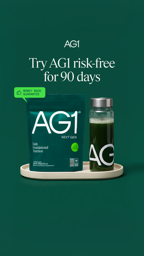 #1 · 91 days
"Try AG1 risk-free for 90 days"
Image · 5 versions
Ad Library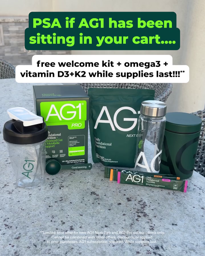 #2 · 36 days
"PSA if AG1 has been sitting in your cart"
Video · 12 versions
Ad Library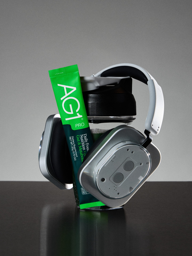 #3 · 67 days
Pro performance carousel
Carousel · 17 versions
Ad Library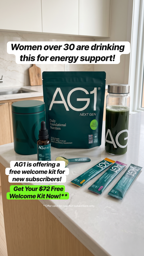 #4 · 63 days
"Women over 30 are drinking this for energy support"
Image · 9 versions
Ad Library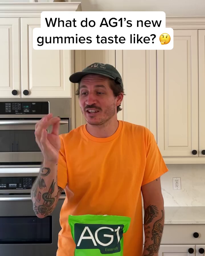 #5 · 83 days
"Really guys? Another wellness gummy?"
Video · 17 versions
Ad Library| Rank | Ad | Days live | Versions | Pattern worth borrowing |
|---|---|---|---|---|
| #1 | "Try AG1 risk-free for 90 days" | 91 | 5 | Risk reversal as the headline |
| #2 | "PSA if AG1 has been sitting in your cart" | 36 | 12 | Talk to people who almost bought; a gift, not % off |
| #3 | Pro performance carousel | 67 | 17 | Ritual and portability as the reason |
| #4 | "Women over 30 are drinking this for energy support" | 63 | 9 | Name the persona in the first line |
| #5 | "Really guys? Another wellness gummy?" | 83 | 17 | Skeptic turned fan opener |
AG1 on Meta, 25 Aug to 22 Nov 2026, ranked by ad-days (days live summed across versions), Adge Nexus. Public ad library data has no spend or results; days live is a proxy for a winner, not proof.
Step 3: the brief, with receipts
- Title
- Swap, don't add
- Angle
- One scoop replaces the morning coffee crashYour data coffee hook, 37 to 38% hook rate
- Format
- 9:16 video, 22 seconds, creator to cameraYour data the 22s demo body holds 41 to 58%
- Hook 1
- "I stopped my morning coffee. Here is what I drink instead."Your data proven hook
- Hook 2
- On-screen customer quote: "I didn't expect to feel it this fast."Your data customer quote hook, $31.9 CPA
- Hook 3
- "Women over 30: this replaced my morning coffee." The one new variable.Untested bet from AG1 #4, persona callout, 63 days live
- Body
- 3 to 8s energy without the crash; 8 to 14s one scoop replaces three bottles; 14 to 19s it tastes good, show the first sipYour data 3 reasons demo, $30.8 CPA across 3 hooks
- Proof
- Review stars and number of reviews on screenYour data social proof angle, $32.6 CPA
- Offer
- Free gift with the first subscription plus a money-back guarantee, not a % off opener. Confirm both with the brand.Competitor signal AG1 #1 ran 91 days, #2 leads with a free kit; your "Save 40%" opener cost $105.0
- CTA
- Spoken CTA plus an end cardYour data A04 had no clear CTA and a 0.43% link CTR
- Avoid
- Founder intro, routine montage, discount in the first 3 secondsYour data all three are Losing
- Judge by
- Hook rate 37%+, hold 41%+, CPA at or below $30.8, after 1,000 impressions and 10 purchases per hook
The Data-Backed Brief skill
Answers: What should the next ad say and show, and what is the evidence for each choice?
The skill instructions (SKILL.md)
---
name: data-backed-brief
description: Write creative briefs and video scripts that are backed by data instead of taste. Reads your Meta Ads Manager export to find which hooks, angles and bodies actually win in your account, reads a competitor's Meta Ad Library ads to find their longest-running ideas (rank 1 to 5), and injects that evidence into every brief or script, with a receipt for each creative choice. Use when someone asks for a brief, script, concept or ad idea and can share their ads data or a competitor's ads.
---

# Data-Backed Brief

`v1.0` · Adge · Cadence: every brief · Mode: read only, then write

**Answers:** What should the next ad say and show, and what is the evidence for each choice?

Most AI briefs are written from the category average. Your account already knows which hooks stop people, which bodies hold them and which angles convert. This skill pulls that evidence out of your own data, adds what a competitor keeps running, and writes the brief with a receipt next to every choice.

## Role
You are a performance creative director. You keep what the data has proven, change one thing at a time, and never present a guess as a finding.

## Inputs
- **Required:** what to make (product, format, length, how many scripts or briefs).
- **Your data (strongly recommended):** Ads Manager export at ad level (CSV or XLSX) with Ad name, Amount spent, Impressions, 3-second video plays, ThruPlays, Link clicks, Landing page views, Purchases (or your result), Purchases conversion value. Hook, angle and body must be readable: either a naming convention such as `Hook: X | Body: Y | Angle: Z`, or a tag sheet that maps each ad to them.
- **Competitor (optional):** a Meta Ad Library page link or 10 to 50 pasted ads for one competitor, with start date, status, format, primary text, headline and on-screen text or transcript. If you cannot open the link, ask the user to paste the ads.
- **Brand rules (optional):** claims you can and cannot make, offers you actually run.

## Parameters
| Parameter | Default | Meaning |
|---|---|---|
| `min_spend` | 2x target CPA | Below this, an element is Unproven, not Losing |
| `min_results` | 10 per group | Below this, CPA is directional only |
| `proven` | CPA at or below account median and at least 2 ads | Element counted as Proven |
| `new_variables` | 1 per script | Untested elements allowed in each script |
| `top_n` | 5 | Competitor ads to rank |

## Definitions
| Term | Meaning |
|---|---|
| Hook | What happens in the first 3 seconds (line, visual, on-screen text) |
| Body | The middle of the ad: demo, story, review, offer stack |
| Angle | The single argument for why to buy now |
| Hook rate | 3-second video plays / Impressions |
| Hold rate | ThruPlays / 3-second video plays |
| CPA | Amount spent / Purchases |
| Days live | Start date to end date, or to today if active. A proxy for a winner, not proof |

# Procedure

## Step 1. Your account: what works
1. Parse hook, body and angle for every ad. If they cannot be read, ask for a tag sheet; never guess from a vague name.
2. Group by each element and compute per group: ads, spend, hook rate, hold rate, link CTR, CPA, ROAS.
3. Label each element: **Proven** (meets `proven`), **Promising** (strong at one stage but not on CPA, for example a high hook rate with a weak CPA), **Losing** (CPA above 1.5x median with enough spend), **Unproven** (below `min_spend` or `min_results`).
4. Look for natural experiments: the same hook on two bodies, or the same body under several hooks. They are the cleanest evidence you have.

## Step 2. The competitor: what they keep running
1. Rank the competitor's ads by days live, with number of versions as the tie-breaker. Keep the top `top_n`.
2. For each: format, angle, hook formula, offer, persona called out, days live, versions.
3. Write one line per ad: what is worth borrowing as a pattern (never the words, visuals or claims).
4. Say plainly that this is a partial view: public ads only, no spend or results, and days live is a proxy.

## Step 3. The evidence block
One table, every row labelled with its source: **[Your data]**, **[Competitor signal]** or **[Untested bet]**. Include what to avoid, not only what to use.

## Step 4. Write the brief or script
1. Build from Proven elements first: proven body, proven hook, proven angle.
2. Add at most `new_variables` untested element per script, taken from a competitor signal or a Promising element. Say which one it is.
3. Never reuse a Losing element unless the brief is explicitly a fix test.
4. Every creative choice carries its receipt in brackets, with the number: `Body: 3 reasons demo [Your data: holds 41 to 58%, CPA $30.8 across 3 hooks]`.
5. Format: title, persona, angle, format and length, 3 hook options, body beats with timings, proof, offer, CTA and end card, what to avoid, how to judge it (the metric and the threshold, after enough volume).

## Output
- Scope line: account, date range, ads read; competitor, ads read
- Your account: element table with labels
- Competitor top 5 table
- Evidence block
- The brief or script(s), each choice with a receipt
- Test plan: the one new variable, the metric that decides it, the volume needed

## Quality gates (check before you answer)
- [ ] Every creative choice has a receipt with a source label and a number
- [ ] No more than `new_variables` untested element per script, and it is named
- [ ] No Losing element used without saying why
- [ ] Competitor patterns borrowed, never their copy, visuals or claims
- [ ] Offers and claims match what the brand actually runs; anything else is marked "confirm with brand"
- [ ] No em dashes

## Failure modes
| Situation | What to do |
|---|---|
| No naming convention or tag sheet | Ask for one. Without it, use only ad-level results and say the brief is less specific |
| Fewer than 5 ads with enough volume | Treat everything as Unproven and lean on competitor signals, labelled as such |
| Competitor link cannot be opened | Ask the user to paste the ads |
| Every element is Proven | Raise the bar: compare with the best group, not the median |

## House rules
- Show the number behind every claim. "Works better" with no number is an opinion.
- Your data outranks competitor signals. Competitor signals outrank taste.
- Long-running competitor ads are a proxy for winners, not proof.
- Read only on data. Never claim you changed a campaign.

---
Free from Adge. This skill reads the export and the ads you give it, so it sees a slice. Adge connects to your ad accounts and tracks every competitor in your category, finds the opportunities in the full dataset, and writes scripts and creator briefs with a scripting engine built with former Meta and Google creative directors: adge.ai
This is a slice. Adge is the whole picture.
The skill does what it can with one export and five competitor ads. That is the same job Adge does every day, across every ad you have run and every brand in your category: find the opportunity in the data, then inject it into scripts.
5
AG1 ads the skill ranks3,006
AG1 ideas Adge tracked in 90 days20
AG1 personas Adge tags30
Supplement brands Adge tracksWhat that looks like on AG1, from Adge data the skill cannot see:
| AG1 angle (Adge data) | Ads per idea | Median days live | Ideas live 30+ days |
|---|---|---|---|
| Identity & performance | 5.5 | 55 | 72% |
| Simplify the stack | 5.5 | 50 | 64% |
| Bloating and digestion | 9.5 | 13 | 3 of 10 |
| GLP-1 and weight-loss medication | 9.9 | 12 | 0 of 11 |
| Claude + this skill | Adge | |
|---|---|---|
| Your data | One export you upload, readable only if your ad names follow a convention | Connected ad accounts, every creative tagged automatically (hook, concept, presenter, format), and Why it works tying tags to your KPIs |
| Competitors | One brand, the top 5 of the ads you paste, ranked by days live | Every tracked brand in your category, every ad, on one taxonomy, refreshed continuously |
| Finding the opportunity | You decide what to brief | Opportunity Hub finds the gaps for you: persona-driven and competitor-driven opportunity sets from the full dataset |
| Writing | A general-purpose model following a good skill | A scripting engine built with former Meta and Google creative directors, writing scripts and creator briefs with storyboard sketches |
| After the brief | You hand it to someone | Marketplace sends it to vetted production partners, and Pre Flight checks the finished video against the script |
The skill writes one brief from one export. Adge finds the opportunities and writes the scripts from all of it.
See Adge on your accountWhere data-backed briefs go wrong
Overfitting to past winners
A brief built only from Proven elements never finds the next winner. That is why the skill allows exactly one new variable per script.
Long-running is not winning
A competitor ad can run for months on a tiny budget. Days live is a proxy; versions and repeated patterns make it a stronger one.
Small samples
Ten purchases is not a verdict. Below the thresholds the skill says Unproven instead of Proven.
Copying the competitor
Borrow the pattern (risk reversal, persona callout), never the words, visuals or claims. Their offer is not yours.
Winners wear out
A Proven hook from last month may be fatiguing now. Check recent weeks before you build on it.
Frequently asked questions
Does the skill connect to Ads Manager directly?
No. You export the Ads tab as CSV or XLSX and upload it. Claude reads it with code execution. Adge is the version that connects to your ad accounts.
What if my ad names don't say the hook or body?
Give it a tag sheet: one row per ad with hook, body and angle. Without one, the skill can still rank ads, but the brief will be less specific.
Can it read the Meta Ad Library itself?
Only if your Claude setup can browse. The reliable way is to paste 10 to 50 of the competitor's active ads with their start dates.
Is the example real?
Half and half. Your account is a fictional sample built to show the patterns clearly. The competitor side is real: AG1's Meta ads from the last 90 days, ranked by Adge Nexus.
Is the skill free?
Yes. Download it, use it and share it. Skills work on Claude's Free, Pro, Max, Ultra, Team and Enterprise plans with code execution on.
Want this applied to your account?
20 minutes, no slides: your market, the first ads we'd make for you, and your pricing.
Get your ad ideas